
Gas Safety Comes First
If you smell gas, do not touch any switches. Leave the building and call 911 or the gas utility from outside. Do not try to light or repair anything. A gas smell is an emergency that overrides every other step in this guide.
Carbon monoxide is also a risk with gas appliances. A working CO alarm near sleeping areas and near the heater is basic protection. If the alarm sounds, get outside and call 911.
How Igniters Work
Many modern gas water heaters use an electronic igniter, either a hot surface type that glows or a spark type that clicks. It lights the pilot or the burner, and a flame sensor confirms the flame. If the igniter fails, the burner never lights, and you get no hot water.
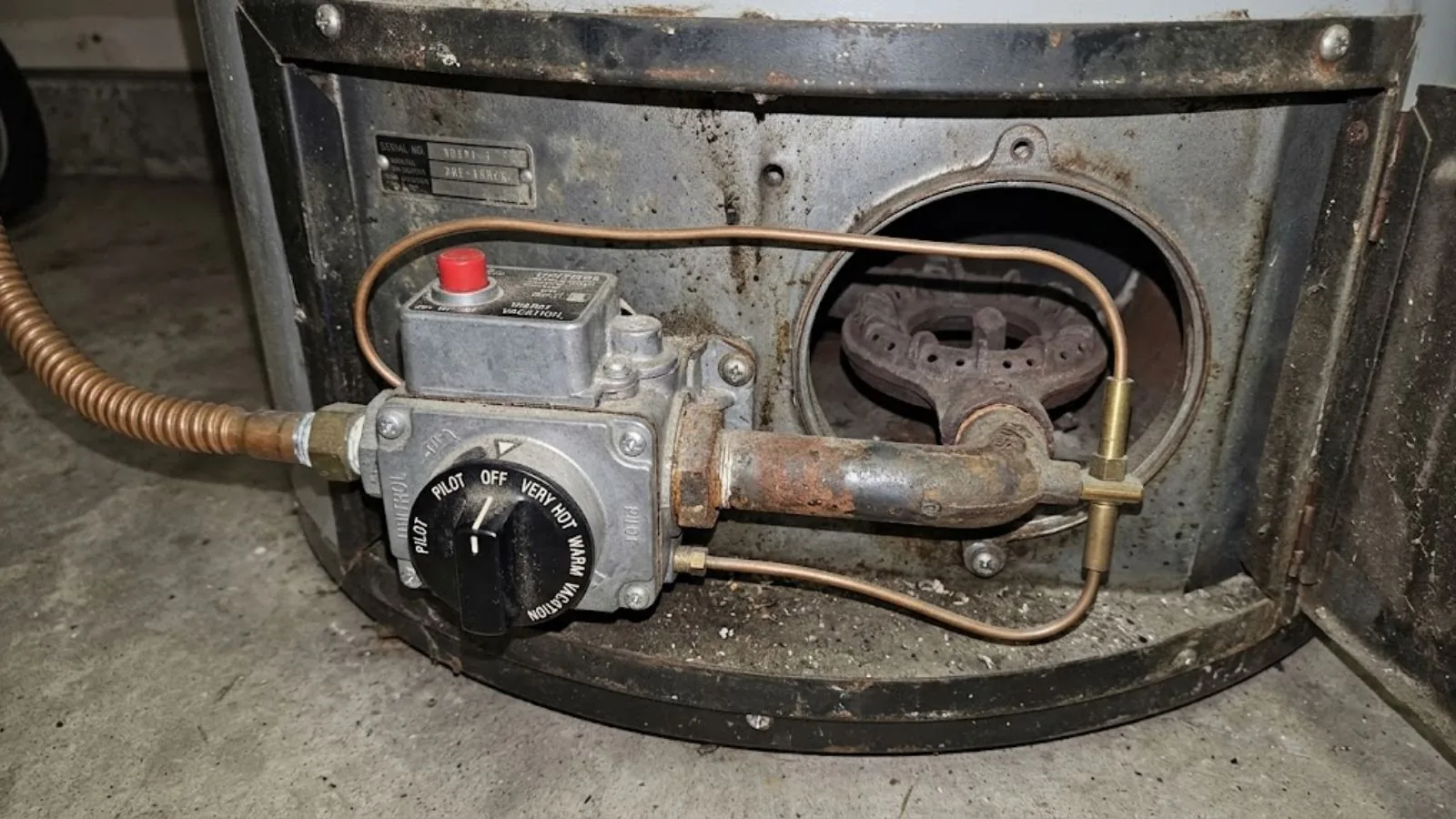
Older heaters use a standing pilot lit by a flame, with a thermocouple that senses it. A pilot that will not stay lit often points to a worn thermocouple or a dirty pilot tube and not an igniter.
No-Heat Causes on a Gas Water Heater
| Symptom | Likely cause | Who should handle it |
|---|---|---|
| No glow or no click at the igniter | Failed igniter or control board | Plumber |
| Igniter glows, burner never lights | Gas supply issue or gas valve | Plumber or gas utility |
| Burner lights, then shuts off | Flame sensor or thermocouple | Plumber |
| Pilot goes out | Thermocouple, draft or dirty pilot tube | Plumber |
| Smell of gas | Gas leak | Leave and call 911 or the gas utility |
Heater Will Not Light?
Call the 24/7 line. Same-day appointments are offered when available, and you hear the price first.
What a Plumber Does
- 1
Safety check
The plumber checks for gas leaks and verifies venting and combustion air.
- 2
Test the igniter
Electrical tests show whether the igniter is receiving power and is working.
- 3
Inspect related parts
The flame sensor, gas valve and control board are checked.
- 4
Replace and test
A failed part is replaced, and the heater is run through a full cycle.
Simple Checks You Can Do Safely
- Make sure the gas control is set to on and the temperature is above the lowest setting
- Check that the power switch or plug is on if your model needs electricity
- Look for an error code flashing on the control
- Confirm that other gas appliances work
- Stop and call if you smell gas or see soot
Repair or Replace the Heater
An igniter is a small part, so a repair makes sense when the tank is sound. If the tank leaks, the heater is very old or repairs keep piling up, replacement may be the better value. Our water heater repair page has the checklist.
If replacement is the choice, read our water heater replacement page for what to expect. A replacement involves a permit in Rolling Meadows, and the plumber handles the paperwork.
Why the Control Board Matters
In heaters with electronic controls, a board sends power to the igniter and watches the flame sensor. A failing board can mimic a failed igniter, so replacing the igniter first sometimes fixes nothing. A plumber tests voltage and continuity to find the real fault.
Error codes help. Many controls blink a pattern that matches a table in the manual, and noting the pattern before the plumber arrives can shorten the visit and point to the right part.
Venting and Draft Problems
A heater that lights and then shuts down may have a venting problem. A blocked flue, a bird nest or a negative-pressure house can interfere with the exhaust. These can create carbon monoxide hazards, so they deserve a proper check.
Keep the area around the heater free of paint cans, rags and other stored items. Never block the air openings in a utility closet, since the burner needs air to run safely.
What The Visit Will Cost You In Time
Most igniter and sensor repairs take a short visit when the part is on the truck. If the control board or gas valve needs ordering, it can take longer, and the plumber may suggest a temporary plan for hot water.
Ask if the part is in stock and what the warranty on the repair is. If the heater is old, it is reasonable to ask for a replacement quote at the same time, so you can decide with both numbers in hand.
Keep A CO Alarm Current
Carbon monoxide alarms wear out, usually after five to ten years, and the date is printed on the back. Replace an expired alarm even if it still beeps. Test it monthly, and place one near sleeping areas and one near the heater.
A CO alarm is the one safety device that protects you from a hazard you cannot smell. It costs little and is worth checking whenever you service a gas appliance.
Rolling Meadows Rules That Touch Gas Heaters
The City of Rolling Meadows plumbing FAQ states that concealed plumbing must have an access door or panel. That matters for a heater in a closet, because the plumber needs to reach the controls and the valves. Keep the access clear of stored items.
The city also says a permit is required for a new or replacement water heater, and lists vent clearances of 6 inches for single-wall pipe and 1 inch for B-vent. Replacing only an igniter is a repair, and the city is the source to ask about your specific job.
Nearby Service
We dispatch from Rolling Meadows and also serve Palatine, where the village has its own rules for gas heaters, including clearances in garages. See Palatine emergency plumbing for those.
In both places, a gas heater that will not light is worth a call. Describe the symptoms and any error codes, and dispatch will tell you what to check while the plumber is on the way.
Sources and Local Rules Behind This Page
Plumbing work in Illinois is governed by the Illinois Plumbing Code, 77 Ill. Adm. Code 890, which municipal inspectors enforce, and the Illinois Department of Public Health licenses plumbers. The permit and vent clearance notes here come from the City of Rolling Meadows plumbing FAQ, according to which a new or replacement water heater needs a permit.
We name these sources so you can check them yourself. Rules and phone numbers change, so confirm with the city office or the state before you rely on any detail for a permit or a purchase.
Common Questions
It involves gas and electrical safety. A plumber is the safer choice for most homeowners.
Repeated failures can come from voltage problems, poor venting, sediment or a failing control board.
Leave the building and call 911 or the gas utility from outside.
The city's FAQ requires an access door or panel for concealed plumbing.
The city lists a permit for a new or replacement water heater. For a repair, ask Community Development.
A heater that fails to vent properly can be. Keep a working CO alarm nearby.
Still not sure what you are dealing with? Call (847) 281-8626 and describe it to our dispatcher.