
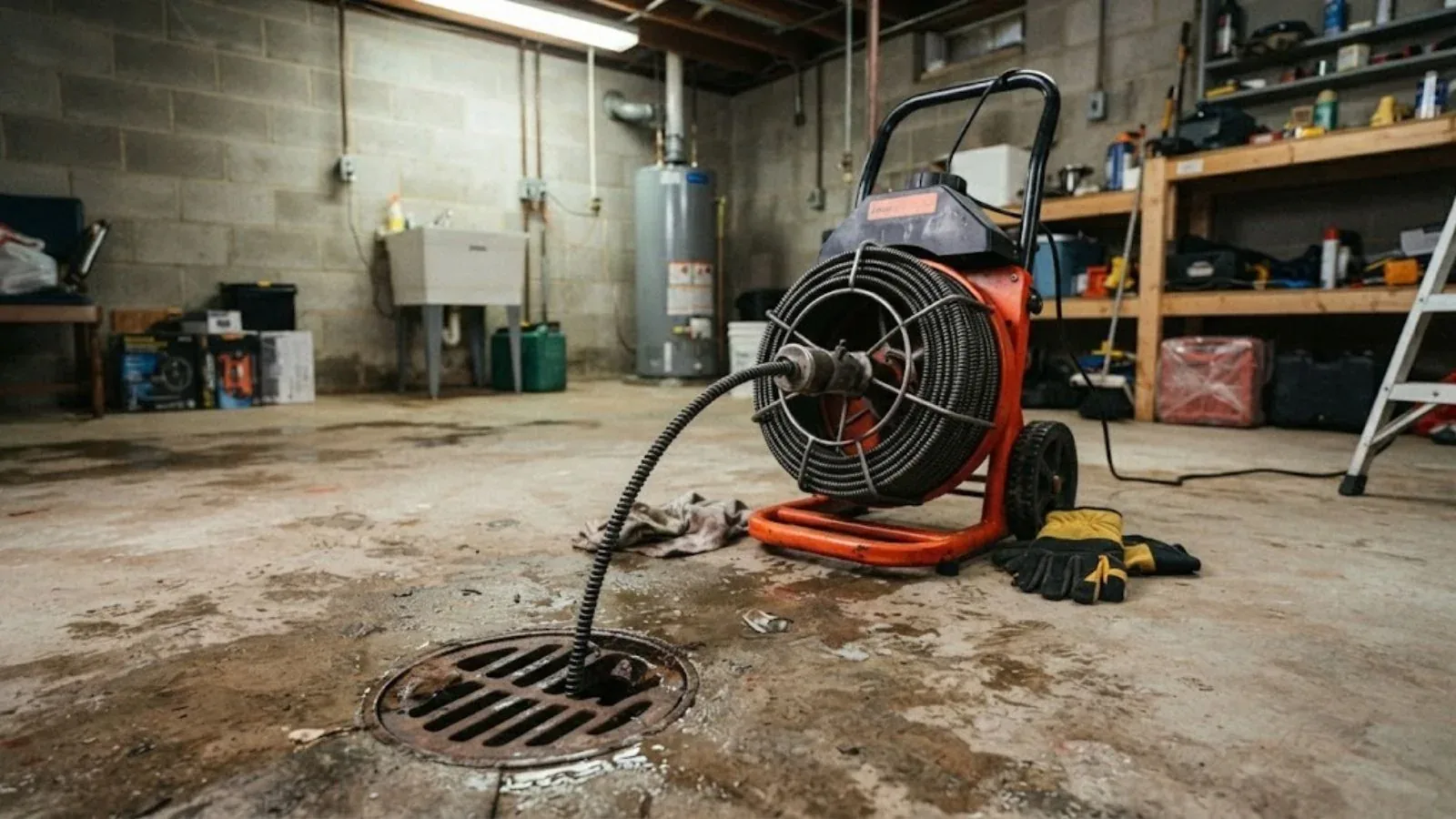
When a Clogged Drain Is an Emergency
Most slow drains can wait for a same-day appointment when one is available. A drain becomes an emergency when water or sewage is rising instead of falling. That includes a toilet that bubbles when the washer drains, a basement floor drain that burps up gray water, or a tub that fills while you run the kitchen sink.
Those signs point to a blockage deeper in the line, and every gallon of water you add has nowhere to go. Stop using the water, call the 24/7 line and tell dispatch which fixtures are affected. If sewage is on the floor, keep children and pets out of the room until it is cleaned.
Which Drain Is Clogged?
Where the clog shows up tells the plumber where to start, so describe it as precisely as you can.
One sink or tub only
The blockage is almost always in that fixture's own trap or branch line, and a cable machine usually clears it in one visit.
Two fixtures on the same floor
The shared branch line is clogged, often with grease, soap scum or hair that has built up past the first fixture.
Every drain is slow, or toilets gurgle
The main drain or sewer lateral is the likely culprit, which is a job for a larger machine or a sewer line cleaning.
Basement floor drain overflows
Water or sewage is backing up from the main line. Stop water use and call right away, since the floor drain is the lowest outlet in the house.
Snaking, Hydro Jetting or Camera First?
Different clogs need different tools. This is the framework the plumber uses to pick one, and you will hear the reasoning before you approve the price.
| Situation | Usual first tool | Why |
|---|---|---|
| Hair or soap clog in one fixture | Hand auger or small cable machine | Fast, low cost and gentle on older pipe |
| Grease-coated kitchen line | Hydro jetting | Water at high pressure scours the pipe wall, where a cable only punches a hole |
| Clog returns every few weeks | Camera inspection | A repeat clog usually means a belly, a break or roots that a cable cannot fix |
| Whole-house backup | Main line cable, then camera | Clearing the line first stops the damage, the camera finds the cause |
Kitchen Sink Clogs
Kitchen drains clog differently from bathroom drains because the culprit is grease, food scraps and soap that cool and harden inside the pipe. The first sign is a sink that drains a little slower each week, then a day when standing water will not move at all.
A cable machine can open the line, but a pipe that is lined with grease will clog again quickly. If the sink has a garbage disposal, we check that the disposal itself is not the blockage, and our garbage disposal repair page covers jams and leaks. Ask dispatch about jetting if this is the second clog in a season.
Tub and Shower Drains
Tub and shower clogs are mostly hair held together by soap. A strainer catches most of it, and a plumber can pull the rest out with a small auger without taking the fixture apart. If the tub and the toilet back up at the same time, the problem is no longer in the tub, and the line is blocked further downstream.
In older homes the shower drain may connect to a branch with a long horizontal run. When that run has settled, water sits in it and debris collects, which is why a plumber might suggest a camera look after a second clog.
Drain Backing Up Right Now?
Call the 24/7 emergency line and describe which fixtures are affected. A same-day appointment is offered when one is available.
What Happens During a Drain Cleaning Visit
The plumber starts by asking where the water backs up and which fixtures are involved, then checks the cleanout and the traps. A cable or auger goes in from the closest access point. The goal is to clear the blockage and then run water to confirm the drain moves freely.
You get a clear price before work starts, and the plumber explains whether the clog looks like a one-time event or a sign of a bigger line problem. If the line is damaged, the next step is usually a sewer line repair conversation, and you decide whether to go ahead.
Drain Problems in Rolling Meadows Homes
The city's 2018 comprehensive plan says most housing here dates from 1950 to 1980. Drain lines from that era have had decades to collect scale, settle or take on roots, so a clog is sometimes the first symptom of an aging line instead of a one-off blockage.
On the sewer side, Rolling Meadows draws a line between the homeowner and the city. The lateral from your building out to the city main belongs to you, and a blockage in the main is the city's. If every drain in the house is slow, the city's guidance is to call Public Works first, and we are happy to take the call after that if the main is clear.
What Affects the Price
Drain cleaning prices vary with the size of the job. We do not quote a flat number sight unseen, because a hair clog in a tub and a grease clog in a main line are very different work.
Homeowners insurance usually does not pay for routine drain cleaning, though some policies cover water damage after a sudden backup. Ask your agent before you call so you know what to document. Want your real number? Call (847) 281-8626.
What to Do and Not Do While You Wait
- Stop running water into the blocked drain, including the washer and dishwasher
- Do not pour chemical drain cleaner, which can splash on the plumber and damage older pipe
- Do not use a plunger on a toilet if sewage is also backing up elsewhere
- Lift rugs and belongings off the floor near the affected drain
- Take a photo of any overflow for your records
Sources and Local Rules Behind This Page
Plumbing work in Illinois is governed by the Illinois Plumbing Code, 77 Ill. Adm. Code 890, which municipal inspectors enforce, and the Illinois Department of Public Health licenses plumbers. The ownership and cleanout guidance here comes from the City of Rolling Meadows sewer guide, according to which the owner maintains the lateral to the main.
We name these sources so you can check them yourself. Rules and phone numbers change, so confirm with the city office or the state before you rely on any detail for a permit or a purchase.
Common Questions
Yes. The emergency line is answered 24 hours a day, every day. Call, describe which drains are backing up and dispatch will arrange the next available plumber.
A repeat clog usually means the cause is deeper than the blockage, such as grease buildup on the pipe wall, a low spot in the line or tree roots. A camera look shows which one, so the fix targets the cause.
We suggest skipping it. The chemicals can sit in a pipe that will not drain and burn skin when the plumber opens it, and they rarely clear a serious clog.
Yes. Kitchen clogs are mostly grease and food, so jetting often works better. Bathroom clogs are mostly hair and soap, which an auger removes well.
Yes. A floor drain that backs up usually points to the main line, so the plumber clears the main and checks whether the blockage is on your lateral or in the city main.
If every drain in the house is slow, or the backup follows heavy rain, the City of Rolling Meadows asks residents to call Public Works at 847-963-0500 first. Public Works can check the city main at no cost.
Still not sure what you are dealing with? Call (847) 281-8626 and describe it to our dispatcher.