
Start With How the Water Gets In
Water enters a basement through cracks in walls or floor, the joint where wall meets floor, window wells, floor drains and rising groundwater. Some of these are drainage problems and some are plumbing problems. A product that fits one will do little for another.
Observe the pattern before buying anything. Does water appear only after heavy rain? Does it come from one spot or along the whole wall? Does it smell like sewage? Those clues sort the problem into groundwater, surface drainage or a drain backup.
Interior Products Compared
| Product | What it does | Limits |
|---|---|---|
| Waterproof paint or sealer | Coats the wall to resist dampness | Does not stop water under pressure and can peel |
| Crack injection | Seals an individual crack | Fixes the crack, not groundwater pressure |
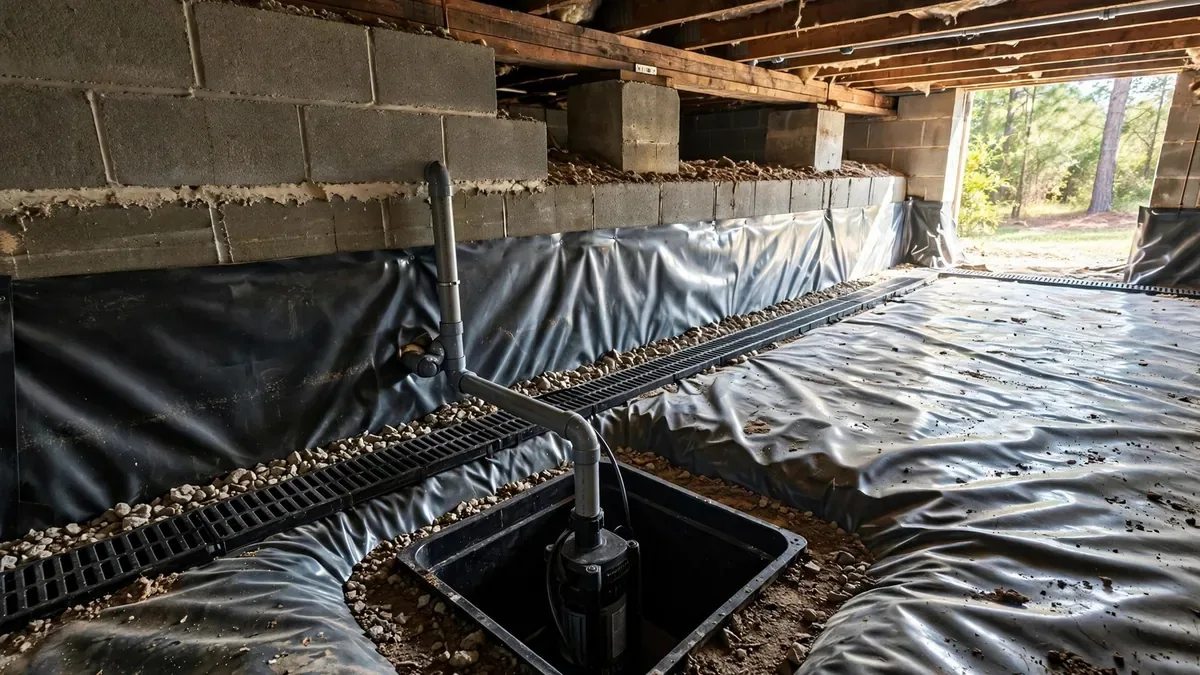
| Interior drain tile and sump | Collects water at the wall base and pumps it out | Needs a working pump and discharge |
| Sump pump with backup | Removes water from the pit | Needs power or a backup |
| Vapor barrier or wall panels | Directs seepage to the drain | Used with a drain system |
Water in the Basement Now?
Call the 24/7 line. A same-day appointment is offered when available, and the price is clear first.
Why Paint Alone Usually Fails
Water pushing through a concrete wall carries hydrostatic pressure, and a surface coating cannot hold it back for long. The paint blisters, peels and lets water through. Coatings can help with minor dampness, but they are not a cure for seepage.
If you see white powder on the wall, that is efflorescence, left behind as water evaporates through the concrete. It confirms moisture is moving through the wall and points toward drainage and not just cosmetic repair.
How an Interior Drain System Works
- 1
Open the floor edge
A strip of floor along the wall is cut and removed.
- 2
Lay drain pipe
Perforated pipe is set in gravel next to the footing.
- 3
Connect to a sump
The pipe runs to a sump pit with a pump and a check valve.
- 4
Patch and discharge
The floor is restored and the pump discharges away from the house.
Do These Before Spending Money
- Extend downspouts several feet from the foundation
- Check that soil slopes away from the house
- Clean gutters and window wells
- Test the sump pump with a bucket of water
- Fix leaking pipes, which can mimic seepage
When a Plumber Is the Right Call
A plumber is the right person for drains, sump pumps and pipe leaks. Our basement waterproofing service covers the plumbing side, and the sump pump repair page explains pump problems.
Large structural cracks and bowing walls call for a foundation specialist. We will say so if that is what we see, so you do not pay for plumbing work that will not solve the problem.
Floor Drains and Sewer Backups
Water in a basement is not always groundwater. A floor drain that backs up sends sewage onto the floor, and that has a different cause and a different fix. The water smells, is cloudy and often appears when several fixtures are used at once.
A backwater valve, installed in the sewer line, can prevent backups from entering the house. Ask a plumber whether one is appropriate and whether your insurance offers an endorsement for sewer backup.
Humidity and Condensation
A damp feel and musty smell do not always mean leaks. Warm humid air meeting cool concrete forms condensation, especially in summer. A dehumidifier and better air flow often solve it.
A simple test is to tape a square of plastic sheeting to the wall for a couple of days. Moisture on the room side points to condensation, and moisture on the wall side points to seepage through the concrete.
What To Expect After Installation
After an interior drain is installed, you may still see some dampness at the wall base as the system settles, but standing water should be collected and pumped away. Mark the floor and watch it after the next heavy rain.
Keep the sump pit clean and test the pump each season. A waterproofing system is only as good as the pump at its end, so ask for a service plan and know whom to call if the pump stops.
Protecting Belongings In The Meantime
Store boxes on shelves or plastic risers, not directly on the floor. Use plastic bins with lids and keep paper goods and electronics off the lowest level. Move the furnace and water heater controls up if your basement floods.
A water alarm near the sump pit and floor drain gives early warning. Cheap battery models sound when they get wet, and smart models send a message to your phone.
Storm Water in Rolling Meadows
The City of Rolling Meadows maintains over 54 miles of storm sewer that drains to Salt Creek. Its storm water guidance says that when standing water appears after rain, residents should wait 48 hours to see whether it drains before treating it as a storm sewer problem.
A basement is private property, so interior drainage and sump pumps are the owner's job. If the street or yard has standing water that does not drain after 48 hours, report it to the city. We also serve Palatine, where our Palatine page explains how we reach you there.
Reading a Waterproofing Proposal
A good proposal names the problem it solves, lists the materials, explains the discharge and states the warranty terms. Be wary of any proposal that promises a guaranteed dry basement without looking at the cause. Ask who services the pump and what happens in a power outage.
Ask whether the price covers restoring the floor and whether permits are needed. A written plan lets you compare quotes fairly, and a plumber who explains each step is easier to trust than one who sells only a product.
Sources and Local Rules Behind This Page
Plumbing work in Illinois is governed by the Illinois Plumbing Code, 77 Ill. Adm. Code 890, which municipal inspectors enforce, and the Illinois Department of Public Health licenses plumbers. The storm water notes here come from City of Rolling Meadows storm sewer guidance and the Metropolitan Water Reclamation District Watershed Management Ordinance of 2014, according to which storm water is regulated across Cook County.
We name these sources so you can check them yourself. Rules and phone numbers change, so confirm with the city office or the state before you rely on any detail for a permit or a purchase.
Common Questions
It can help with minor dampness, but it will not hold back water under pressure.
A sump pump removes collected water. Waterproofing is the larger system that collects and directs it.
It manages water that reaches the wall and floor, as long as the pump works and the discharge is clear.
The city's guidance is up to 48 hours before treating it as a storm sewer problem.
The city has over 54 miles of storm sewer draining to Salt Creek.
We focus on plumbing-side solutions and say when a foundation specialist is needed.
Still not sure what you are dealing with? Call (847) 281-8626 and describe it to our dispatcher.