
What Goes Into the Price
| Item | What affects it | Question to ask |
|---|---|---|
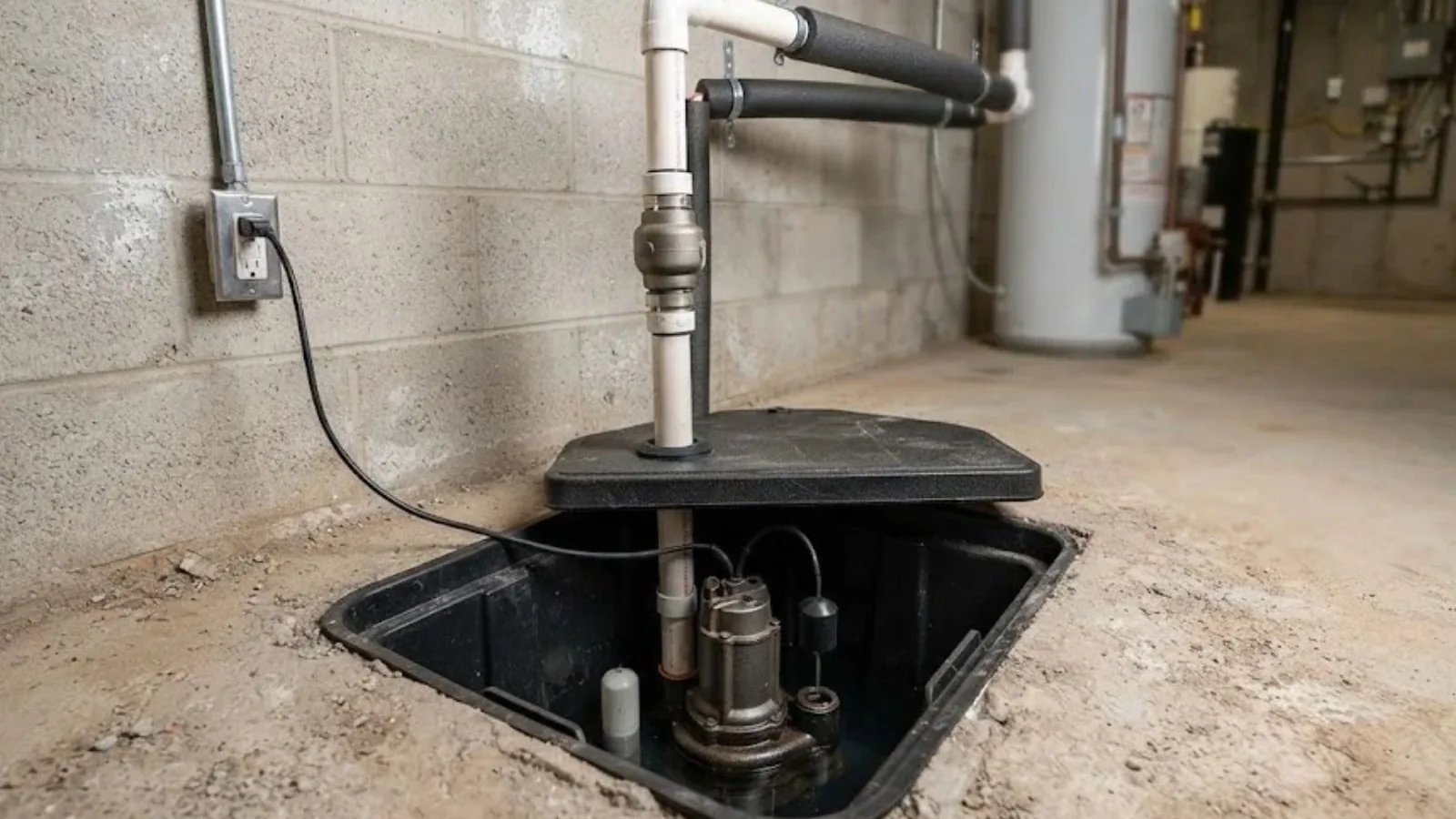
| The pump | Pedestal or submersible, horsepower and quality | What size and why? |
| The pit and basin | New pit or existing one | Is a new pit needed? |
| Floor work | Breaking and patching concrete | Who restores the floor? |
| Check valve and piping | Keeps water from flowing back | What is included? |
| Discharge line | Length and route outdoors | Where does the water go? |
| Battery backup | Extra pump and battery | How long does the backup run? |
New Pit or Replacement
Replacing a pump in an existing pit is the simpler and less costly job. Installing a new pit means cutting the floor, digging, setting a basin and patching the concrete. If water is seeping at a particular spot, the pit is placed where it collects.
A plumber should explain why the pit is where it is and how the discharge will work. Ask whether the price includes concrete patching and whether the work needs a permit.
Want A Clear Price?
Call the 24/7 line. You hear a clear price before work starts, and same-day appointments are offered when available.
Pump Type and Size
Submersible pumps sit in the pit and run quietly, and pedestal pumps stand above it and are easier to service. A larger motor moves more water but is not always better, since an oversized pump cycles too often. The right size depends on the pit and how fast water arrives.
Ask about the check valve and the switch type. A float that can jam, or a check valve that fails, causes many of the callbacks plumbers see. Quality parts cost more at the start and often less over time.
How a Sump Installation Runs
- 1
Assess
The plumber finds where water enters and checks for an existing pit.
- 2
Price and approve
You get a clear price before work starts.
- 3
Install
The pit, pump, check valve and discharge line are set.
- 4
Test
Water is run into the pit to test the float, pump and discharge.
Backup and Power
- A battery backup keeps the basement dry during outages
- Test the backup on a schedule
- Replace batteries as the maker advises
- A water-powered backup needs adequate supply and may not be permitted everywhere
- Ask the plumber about alarms that warn of high water
Why A Cheap Pump Can Cost More
A low-priced pump may have a plastic switch, a thin motor housing or a short warranty. Pumps run in a harsh environment, and a failure during a storm is the costly kind. A better pump with a reliable float and a durable check valve often pays back through fewer failures.
Ask the plumber what brand and model is proposed, how long the warranty lasts and what it covers. Labor warranty matters as much as the part warranty, because most problems come from installation details.
Maintenance That Protects the Investment
Once a season, pour a bucket of water into the pit and watch the pump start, empty the pit and shut off. Clear debris from the pit and make sure the discharge outlet is free of ice, leaves and kinks.
Replace a battery backup on the maker's schedule. A pump that is tested regularly is far more likely to run when the storm arrives, and the plumber can show you the checks in a few minutes.
Getting Quotes You Can Compare
Ask each plumber to quote the same scope, including the pump model, the check valve, the discharge line, floor patching and any backup. Quotes that differ in scope cannot be compared by the bottom line alone.
Ask when the work can start, since storm season books up. A plumber who can come soon, explain the options and give a clear price before work starts is worth more than a slightly lower number from someone you cannot reach.
Warranty And Service Questions
Ask what the warranty covers and for how long, and who comes out if the pump stops during a storm. A short call-back promise and a clear service plan are worth considering when you compare prices.
Keep the model and installation date. A label on the basin or a note in your file helps the next plumber know what is in the pit without digging.
If the pit is shallow or the basin is cracked, the plumber may suggest replacing the basin along with the pump. That adds to the price but removes a weak point, and it is worth asking about when a pump is more than a decade old.
Before storm season, ask the plumber to show you how to test the pump, where the discharge ends and which breaker feeds it. Ten minutes of instruction at the end of the job is part of what a good installer provides.
Storm Water Facts for Rolling Meadows
The City of Rolling Meadows operates over 54 miles of storm sewer that drains to Salt Creek, and the city maintains Plum Grove Reservoir and Twin Lakes Reservoir for storm water control. Cook County storm water is regulated under the Metropolitan Water Reclamation District Watershed Management Ordinance of 2014.
A sump pump discharge should not send groundwater into the sanitary sewer, and local rules apply. Ask the plumber where the discharge ends and whether it is far enough from the foundation. The city is the source to confirm requirements.
Insurance and Planning
Many homeowners policies exclude water that backs up through a failed sump pump unless a rider is added. Ask your insurer before the next storm. If a pump fails, call a plumber quickly, since the damage grows with every hour.
Our sump pump service team handles installation and repair in Rolling Meadows and Palatine, and basement waterproofing covers the wider drainage plan. See Palatine emergency plumbing for service there.
Sources and Local Rules Behind This Page
Plumbing work in Illinois is governed by the Illinois Plumbing Code, 77 Ill. Adm. Code 890, which municipal inspectors enforce, and the Illinois Department of Public Health licenses plumbers. The storm water notes here come from City of Rolling Meadows storm sewer guidance and the Metropolitan Water Reclamation District Watershed Management Ordinance of 2014, according to which storm water is regulated across Cook County.
We name these sources so you can check them yourself. Rules and phone numbers change, so confirm with the city office or the state before you rely on any detail for a permit or a purchase.
Common Questions
It depends on the pump, the pit, the floor work, the discharge and any backup. A plumber should give a clear price before work starts.
If outages often come with storms, a backup is a reasonable precaution.
It may. Ask the plumber and Community Development.
Away from the foundation, and not into the sanitary sewer.
Over 54 miles of storm sewer, Plum Grove Reservoir and Twin Lakes Reservoir, per the city.
Often not unless a specific rider is in place. Check your policy.
Still not sure what you are dealing with? Call (847) 281-8626 and describe it to our dispatcher.