
Signs a Heating Element Has Failed
A failed upper element usually means no hot water at all, because the upper element heats first and the thermostat controls the lower one only after the top of the tank is warm. A failed lower element tends to give you hot water that runs out quickly, since only the top portion of the tank is being heated.
Other clues include a tripped breaker, water that heats slowly and a tank that is hot at the top but lukewarm further down. These signs overlap with a bad thermostat or a tripped high-limit switch, so a test is the only reliable way to tell them apart.
Element Problem or Something Else
| Symptom | Likely cause | How to confirm |
|---|---|---|
| No hot water at all | Upper element, upper thermostat or the reset switch | Press the red reset button, then test the element with a meter |
| Hot water runs out fast | Lower element or lower thermostat | Test the lower element for continuity |
| Breaker trips repeatedly | Shorted element or wiring fault | Test the element for a short to ground |
| Water is too hot | Thermostat stuck on | Check thermostat setting and operation |
| Rumbling and popping | Sediment on the elements | Flush the tank and inspect the elements |
How an Element Is Tested and Replaced
- 1
Cut the power
Switch off the breaker and confirm with a tester that the heater has no power. Never work on a live heater.
- 2
Open the access panel
Remove the cover and insulation to expose the thermostat and element terminals.
- 3
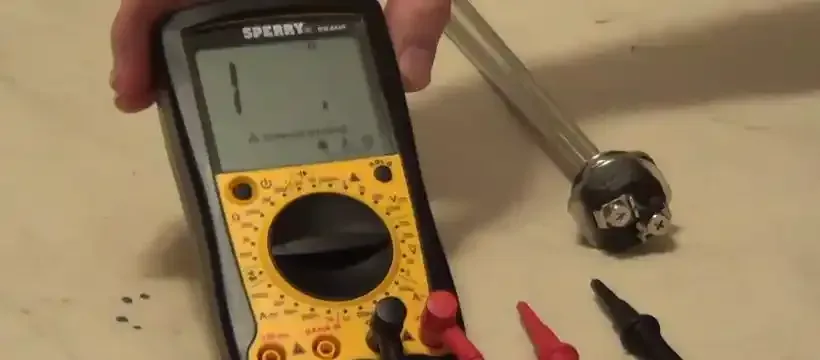
Test the element
With the wires removed, a multimeter on the resistance setting should show a reading. No reading means the element is open.
- 4
Drain below the element
Shut off the cold supply and drain the tank enough to expose the element threads. Water inside the tank spills out otherwise.
- 5
Swap and refill
Unscrew the old element with an element wrench, fit the new one with a fresh gasket, refill the tank fully before switching the power back on.
The Mistake That Burns Out New Elements
The most common error is switching the breaker back on before the tank is full. An element that runs dry can burn out in seconds. Open a hot tap upstairs and let water run until it flows steadily with no air sputtering, then restore power.
Buying the right part matters as well. Elements come in different wattages and styles, such as screw-in and bolt-in, and the data plate on the tank lists the wattage and voltage you need. A mismatch can overheat the tank or underperform.
Tank Cold Right Now?
Our 24/7 line can send a plumber. Same-day appointments are offered when available, and you hear the price first.
When Replacing the Heater Makes More Sense
A heating element is an inexpensive part, so a repair is usually the better value when the tank itself is sound. The picture changes if the tank is old, leaking at the base or heavily corroded, because a new element cannot fix a failing shell.
As a general guide, tanks that are well past a decade old, have rust-colored water and have needed several repairs are candidates for replacement. Our water heater repair page lays out the repair checks, and the replacement page covers the next step.
Safety Notes Before Any Water Heater Work
- Turn off power at the breaker and verify it is off before touching wires
- Let hot water cool or run it down before draining
- Do not skip the pressure relief valve check while you are there
- If you smell gas or the unit is gas-fired, this guide does not apply, so call a plumber
- Stop and call a pro if the tank is leaking from the shell or a fitting
Reading the Data Plate Before You Buy
The data plate on the side of the tank lists the voltage, the wattage of each element and the tank capacity. Match the replacement to those numbers. A 4,500 watt element in a slot built for 3,800 watts can overload the wiring and the tank, and the thermostat will not protect you from that mistake.
Elements also differ in shape. Some screw in with a threaded base, while others bolt on with a flange and a gasket. Take the old element to the store if you can, because it is the easiest way to confirm the fit.
Sediment, Flushing and Element Life
Minerals and sediment settle on the lower element and insulate it from the water, so it overheats and burns out sooner. Flushing a few quarts from the drain valve once a year helps remove the buildup before it hardens.
If the tank has not been flushed in years, the sediment may come out as thick sludge that clogs the drain valve. In that case a plumber can flush it properly, and can tell you whether the tank is worth saving.
Signs To Replace The Tank Instead
If water pools under the tank, the shell is leaking, and no element can fix that. Rust streaks near the fittings, a rotten-egg smell that returns after flushing and repeated element failures are other signs of a tank near the end of its life.
Ask the plumber for the age of the tank from the serial number. Knowing the age helps you weigh a small repair against a replacement that comes with a new warranty and better efficiency.
Keep A Record Of The Repair
Write down the date, the part number and the wattage of the new element, and keep the receipt with the water heater manual. If the new element fails early, the record shows what was installed and helps a plumber or the manufacturer diagnose the cause.
Check the temperature setting while you are at it. Most households do well at 120 degrees, which reduces scald risk and saves energy, and you can raise it slightly if your household needs more hot water.
Rolling Meadows Notes on Water Heater Work
The City of Rolling Meadows states in its FAQ that a permit is required for a new or replacement water heater. Swapping an element is a repair on an existing tank, but if you decide the tank should be replaced, the permit applies. Community Development, which issues permits, requires the contractor's license and bond to be on file before it issues one.
Ask Community Development whether your specific job needs a permit before you start. The city's office is at 3600 Kirchoff Road. This answer comes from the city's own FAQ, and the city is the source to confirm it with.
What a Plumber Brings to the Job
A plumber carries the right element wrench, spare elements in common wattages and a meter, and checks the thermostat, the wiring and the relief valve in the same visit. That saves a second trip if the element turns out not to be the only problem.
If you live in the Palatine area, our 24/7 team also covers the village. See the page on emergency plumbing in Palatine for how that works and what the village requires for water heater permits.
Sources and Local Rules Behind This Page
Plumbing work in Illinois is governed by the Illinois Plumbing Code, 77 Ill. Adm. Code 890, which municipal inspectors enforce, and the Illinois Department of Public Health licenses plumbers. The permit and vent clearance notes here come from the City of Rolling Meadows plumbing FAQ, according to which a new or replacement water heater needs a permit.
We name these sources so you can check them yourself. Rules and phone numbers change, so confirm with the city office or the state before you rely on any detail for a permit or a purchase.
Common Questions
If you are comfortable with electrical safety and draining a tank, yes. Cut power at the breaker first and never run the heater dry.
Test both with a meter. No hot water at all points to the upper element, while hot water that runs out quickly points to the lower one.
The city's FAQ lists a permit for a new or replacement water heater. For a repair, ask Community Development before you start.
It varies with water quality and usage. Sediment shortens their life, so flushing the tank helps.
If the tank is leaking or badly corroded, no. If only the element has failed and the tank is sound, a repair is usually worthwhile.
Questions about the city water supply go to Rolling Meadows Public Works at 847-963-0500 on weekdays.
Still not sure what you are dealing with? Call (847) 281-8626 and describe it to our dispatcher.