
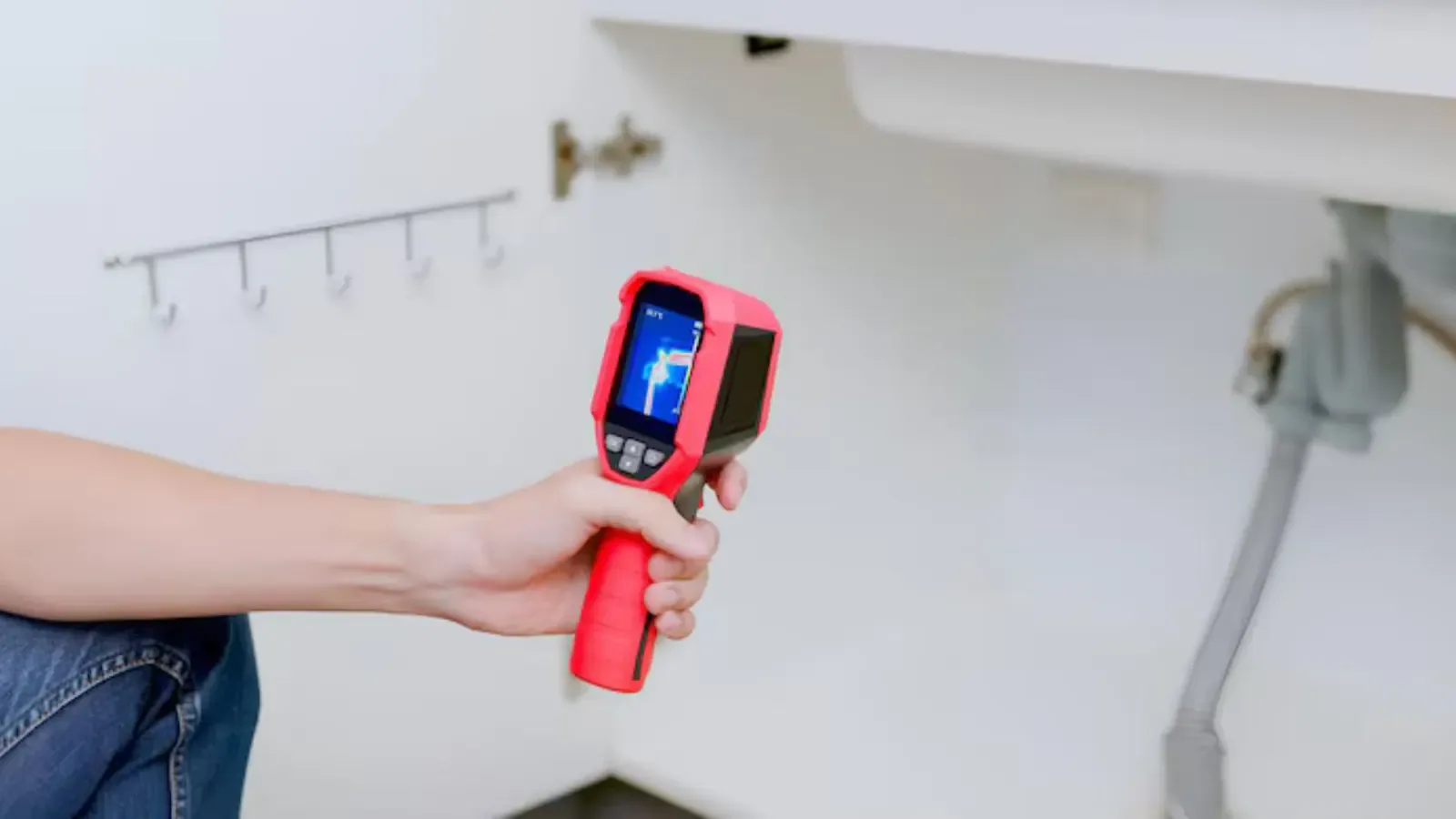
What an Infrared Camera Actually Shows
An infrared camera measures the heat given off by surfaces and displays it as a color image. Wet materials often sit at a different temperature from dry ones because evaporating water cools them, or because a hot water pipe warms the material around it. That difference can appear as a cool or warm patch on a wall, floor or ceiling.
The camera does not see water. It sees temperature, and many things besides leaks change temperature, such as ductwork, sunlight on a wall, insulation gaps or plumbing that carries hot water normally. A skilled operator interprets the image alongside other clues.
Tools Used Alongside a Thermal Camera
| Tool | What it does | Best use |
|---|---|---|
| Thermal camera | Shows temperature patterns | Scanning large areas for anomalies |
| Moisture meter | Measures moisture in building materials | Confirming a wet area |
| Acoustic listening | Hears water escaping from a pressurized pipe | Pinpointing a supply leak |
| Pressure test | Checks whether the system holds pressure | Confirming there is a leak |
| Camera inspection | Views the inside of drain pipes | Drain line leaks and cracks |
How a Leak Search Usually Goes
- 1
Check the meter
With all water off, a meter that moves means a leak somewhere past it.
- 2
Isolate the system
The plumber closes valves to separate hot, cold and sections of the house.
- 3
Scan and listen
A thermal camera, a moisture meter and acoustic tools narrow the search to an area.
- 4
Confirm before opening
The result is checked by a second method, so any opening is small and in the right place.
Suspect a Hidden Leak?
Call the 24/7 line. A same-day appointment is offered when available, and the price is clear first.
What Infrared Cannot Do
A thermal camera works best on surfaces that are close and not thick. A leak behind a thick slab or deep in a wall may show nothing on the surface. Reflective materials can mislead the camera, and a leak that has been running a long time may have evened out its temperature.
That is why a plumber treats the image as a lead. A claim that a camera alone can locate every leak should be doubted. The leak detection page explains the full process, and the slab leak page covers leaks below concrete floors.
Signs Worth a Leak Search
- A water bill that jumped without a change in use
- A meter that moves when everything is off
- Warm patches on a floor or damp baseboards
- Musty smell, peeling paint or stained ceilings
- The sound of running water in a quiet house
Hot Water Leaks and Cold Water Leaks
A leak in a hot water line often shows more clearly on a thermal image because the warm pipe and the wet material around it differ from their surroundings. A cold water leak creates a cooler patch as water evaporates, and that can be subtler.
The type of leak shapes the search. If only the hot side loses water, the plumber can isolate the water heater and its lines. A leak on both sides points toward a different part of the system, such as a shared fitting or the main.
What a Report Should Tell You
After a leak search, you should receive a plain description of what was tested, where the leak is believed to be and how sure the plumber is. A photo of the thermal image is a bonus, but it is not the evidence on its own.
You should also hear the repair options and their prices before any wall is opened. If the plumber cannot locate the leak, it is better to hear that than to open walls on a guess.
Costs And Expectations
A leak search takes time because the plumber works through isolation steps and confirms findings. The price reflects the equipment and the skill needed, and it is separate from the repair. A clear price before work starts covers what the search includes.
Be wary of a promise to find any leak in minutes. Some leaks are obvious, and others take patient work. A good plumber sets expectations early and explains how the search will proceed.
Limits Worth Knowing
Thermal cameras work best when there is a temperature difference between the wet area and its surroundings. On a mild day, with the heat off, that difference can be too small to show. A plumber may suggest running the heat or hot water to improve the image.
No single tool is perfect, and a skilled plumber uses several. That is why a leak search takes patience, and why the result is a pinpointed location and not just a picture.
Who Owns Which Pipe in Rolling Meadows
The City of Rolling Meadows says it owns the water service line from the main to the shutoff valve or B-box, and the homeowner owns the line from that valve into the house. A leak search usually starts at the meter and works inward, which helps show whether the leak is on the homeowner's side.
The city's water page lists about 85 miles of water main and 1,200 hydrants, and the city also states it has no known lead service lines. If the meter moves and the leak seems to be outdoors between the meter and the house, call us. If water is surfacing near the street, call Public Works at 847-963-0500.
What to Do While You Wait
If you find water, shut off the main and photograph the area. Move valuables off wet floors and keep electrical devices away. If the water stops after the main is closed, the leak is on the pressurized side, which narrows the search.
We search for leaks in Rolling Meadows and Palatine. Read about emergency plumbing in Palatine for service details there.
Sources and Local Rules Behind This Page
Plumbing work in Illinois is governed by the Illinois Plumbing Code, 77 Ill. Adm. Code 890, which municipal inspectors enforce, and the Illinois Department of Public Health licenses plumbers. The service line ownership and lead notes here come from the City of Rolling Meadows water pages and its 2025 water quality report, according to which the city has no known lead service lines.
We name these sources so you can check them yourself. Rules and phone numbers change, so confirm with the city office or the state before you rely on any detail for a permit or a purchase.
Common Questions
No. It is a useful lead, but plumbers confirm with other methods such as moisture meters, listening tools and pressure tests.
No. It shows surface temperature, which can hint at what is behind the surface.
Often only a small opening is needed, and only after the leak has been pinpointed.
In Rolling Meadows the city owns the line to the shutoff valve or B-box. A plumber can test from the valve inward.
The city states it has no known lead service lines.
Public Works at 847-963-0500 on weekdays.
Still not sure what you are dealing with? Call (847) 281-8626 and describe it to our dispatcher.