
Why a Slab Leak Cannot Wait
Water escaping under a slab can undermine the soil beneath the concrete, soak flooring and feed mold. A hot-water line that leaks into the slab also wastes energy, since the heater keeps running to replace what is lost. The sooner the leak is found, the smaller the repair.
Close the main valve if you hear running water you cannot explain or find a hot spot. Then call 24/7. If water is coming up through a floor crack, keep electrical devices and people away from the wet area.
Signs of a Slab Leak
Warm or hot spot on the floor
A leaking hot-water line can heat the concrete above it.
Running water sound with all fixtures off
Water moving through a damaged pipe is audible in a quiet house.
Water bill jump or moving meter
Closed taps and a turning meter dial point to a leak.
Damp carpet, buckling flooring or baseboards
Moisture comes up through the slab and damages what sits on it.
Low water pressure
A leak on the supply side reduces pressure at fixtures.
Cracks in walls or floors
Persistent moisture can shift the soil and stress the foundation.
Does My House Have a Slab?
Not every home has plumbing in a slab. Many houses in the area have basements or crawlspaces, and their pipes run overhead or against the foundation. A slab leak applies to a house built on a concrete slab, or to a slab-on-grade addition such as a family room or garage.
If you are not sure, call and describe the house. The plumber will tell you whether the symptoms fit a slab leak or point to a leak elsewhere, and you can read about the broader search on the leak detection page.
Repair Options for a Slab Leak
| Option | How it works | Best fit |
|---|---|---|
| Spot repair through the slab | The slab is opened above the leak and the pipe is repaired | One accessible leak in good pipe |
| Reroute the line | A new line runs through walls or the attic, bypassing the slab | Leaks that keep recurring or a pipe that is hard to reach |
| Epoxy or pipe lining | The pipe interior is coated to seal leaks | Where the pipe is intact enough to take a liner |
| Repipe | Replace the failing lines in the house | Widespread corrosion or several leaks |
Suspect a Slab Leak?
Call the 24/7 line. A same-day appointment is offered when available, and the price is clear first.
How We Locate It
- 1
Confirm the leak
The plumber closes fixtures and checks the meter, then isolates hot and cold lines.
- 2
Listen and image
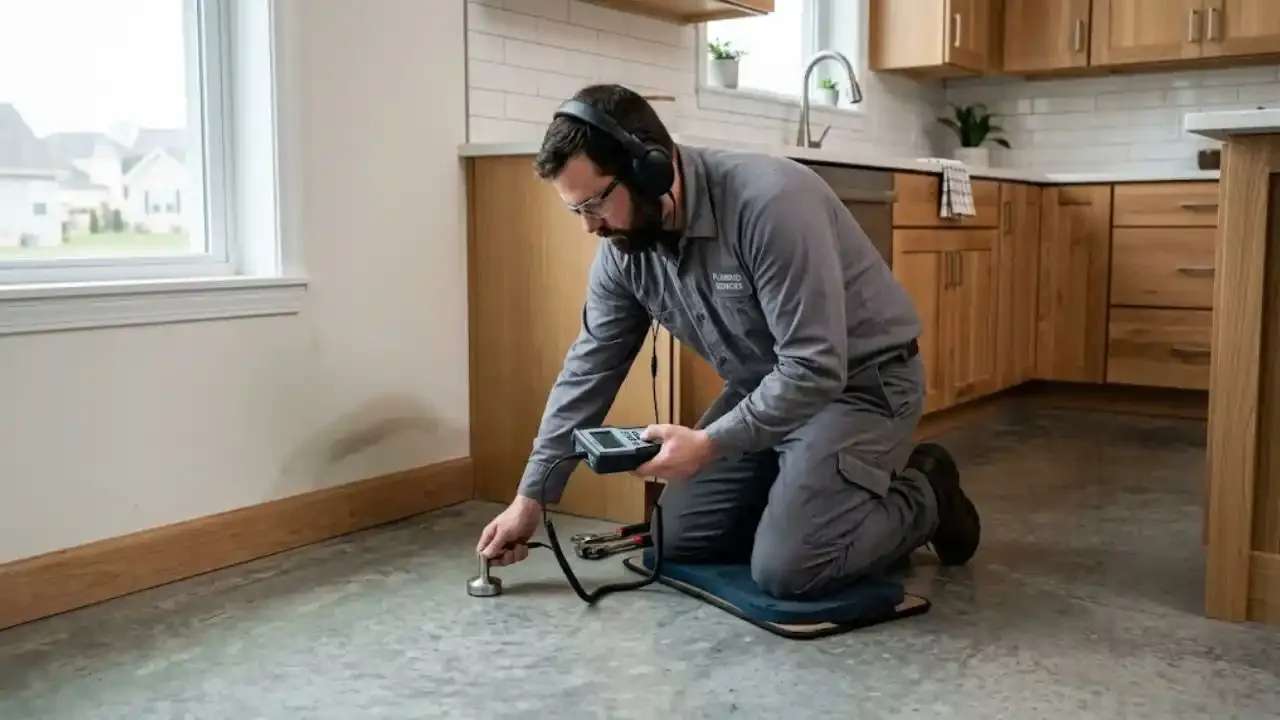
Acoustic and thermal tools narrow the search to a section of the floor.
- 3
Mark the location
The leak is marked so any opening is as small as possible.
- 4
Present the options
You see the repair choices with a clear price before work starts.
Soil, Slabs and Age in Rolling Meadows
Rolling Meadows housing was built mostly between 1950 and 1980, according to the city's comprehensive plan, and later additions were often built on slabs. In older work the supply lines may be copper or galvanized, and copper in contact with concrete and soil can wear over decades.
We do not state a soil type or pipe condition for any home before we have seen it. The plumber checks the actual material and the age of the system, then recommends a repair or reroute based on what is under your floor. That keeps the advice about your house and not a generic guess.
What Affects the Price
Slab leak price depends on the location, the method and the finished floor above.
Insurance may cover resulting water damage but often not the pipe repair. Check your policy. Want your real number? Call (847) 281-8626.
Sources and Local Rules Behind This Page
Plumbing work in Illinois is governed by the Illinois Plumbing Code, 77 Ill. Adm. Code 890, which municipal inspectors enforce, and the Illinois Department of Public Health licenses plumbers. The housing age notes here come from the City of Rolling Meadows 2018 comprehensive plan, according to which most housing was built between 1950 and 1980.
We name these sources so you can check them yourself. Rules and phone numbers change, so confirm with the city office or the state before you rely on any detail for a permit or a purchase.
Common Questions
Yes. The emergency line is open 24/7. Tell dispatch what you hear or feel and whether the meter is moving.
Warm spots on the floor, the sound of running water, a spike in the bill and damp flooring are the main signs, and a plumber can confirm with tests.
Often a small opening is needed for a spot repair, but a reroute avoids the slab altogether. We explain both before you approve.
Often yes, if the rest of the pipe is in good shape. If multiple lines are failing, a repipe may cost less over time.
It depends on the method and the floor. The plumber can give you a window once the leak is located.
Still not sure what you are dealing with? Call (847) 281-8626 and describe it to our dispatcher.