
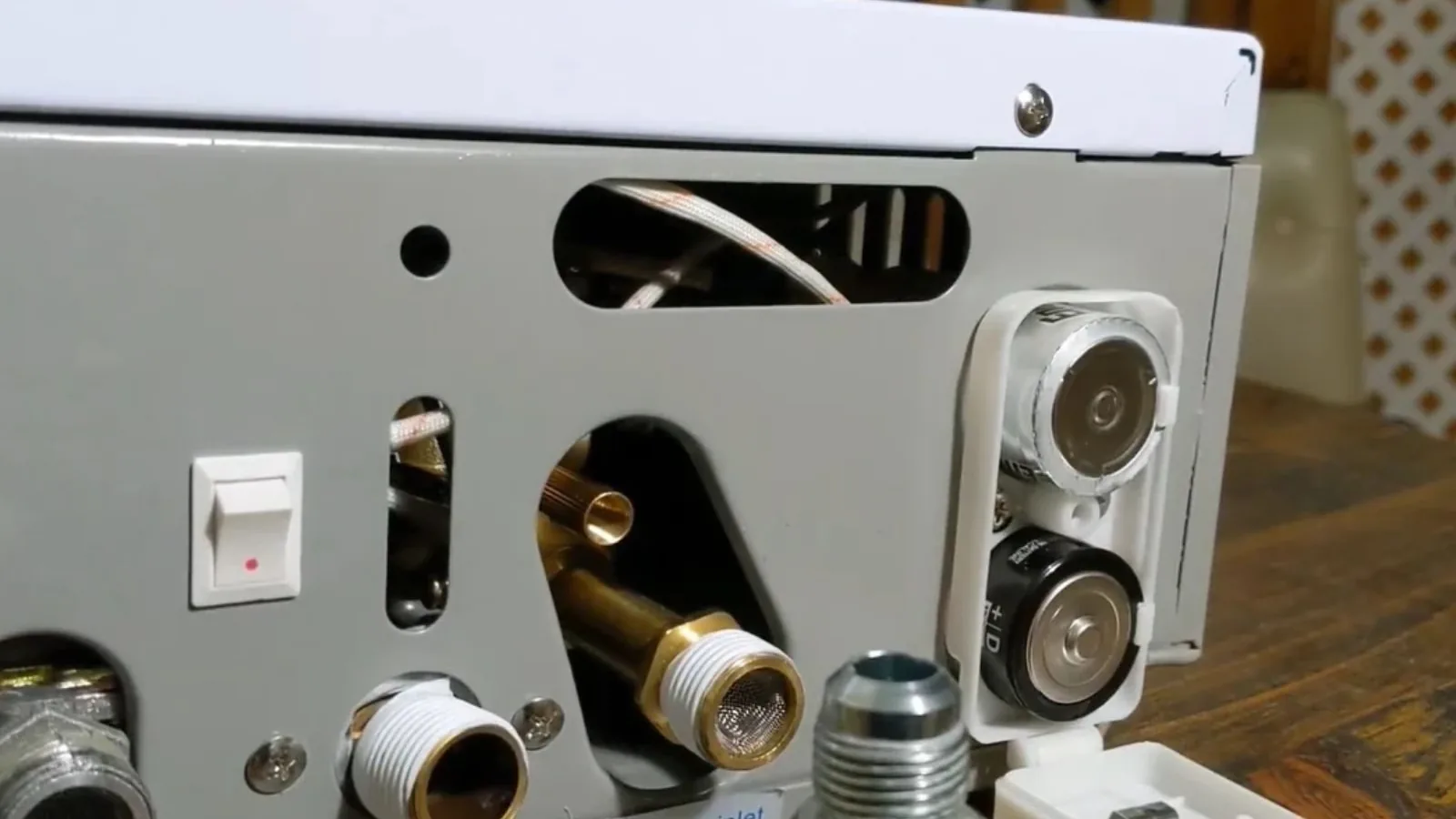
What Indoor Tankless Means
Tankless heaters come in indoor and outdoor models. An indoor unit mounts on a wall inside the house, often in a basement, utility room or garage. It needs a vent to carry exhaust outside and a supply of combustion air, and it needs a gas line sized for a much higher flow than a tank heater uses.
High-efficiency condensing models produce acidic condensate that must drain to a proper location, often with a neutralizer. Those requirements can change a simple swap into a larger installation, which is why a site visit comes first.
Indoor Tankless Installation Checklist
| Item | Why it matters | Typical question |
|---|---|---|
| Gas line size | Tankless units draw a large gas flow | Is the existing line big enough? |
| Venting | Exhaust must go outside safely | Which vent material and route? |
| Combustion air | The burner needs air | Is the room supplied? |
| Condensate drain | Condensing units make acidic water | Where does it drain? |
| Water pressure and flow | Low flow limits performance | What is the pressure? |
| Clearances | Safety distances to combustibles | What does the code require? |
Planning a Tankless Install?
Call and describe the space. A site visit comes first, and you hear a clear price before work starts.
How an Installation Is Planned
- 1
Site visit
The plumber measures the space, checks the gas line and plans the vent route.
- 2
Sizing
Flow needs are matched to a unit size for your fixtures.
- 3
Price and permit
You get a clear price before work starts, including the permit.
- 4
Install and commission
The unit is installed, vented, tested and set up.
Tank or Tankless
A tankless unit can last longer and saves floor space, and it never runs out of hot water in the way a tank does, but it costs more to install and needs more from the house. Simultaneous heavy use can exceed its capacity if it is undersized.
If your gas line, vent or space cannot support tankless without major work, a tank may be the better fit. Our tankless water heater page compares the two in more detail, and the water heater installation page covers planned swaps.
Questions To Ask The Installer
- How will the unit be vented, and with what material?
- Does the gas line need to be upsized?
- Where does the condensate drain?
- What size unit do I need for my fixtures?
- What is covered by the warranty and what maintenance is needed?
Sizing For Your Household
A tankless heater is rated by how many gallons per minute it can heat by a certain temperature rise. In winter, incoming water is colder, so the rise is larger and the flow rating falls. A unit sized for summer may disappoint in January.
List the fixtures that could run at the same time, such as a shower and a dishwasher, and add their flow rates. The plumber uses that total, plus your coldest incoming water temperature, to pick a unit that will keep up.
Maintenance And Lifespan
Tankless heaters need periodic descaling, particularly in areas where scale builds up, plus cleaning of the inlet screen. Skipping maintenance can lower efficiency and cause error codes.
With proper service, many units last longer than tank heaters, though parts and labor for repairs can cost more. Ask about the warranty on the heat exchanger and what voids it, since lack of maintenance sometimes does.
Costs That Surprise People
The unit price is only part of the cost. Upsizing the gas line, running new vent pipe, adding a condensate neutralizer and installing a recirculation line each add to it. Electrical outlets for controls and a service valve kit are also common extras.
A written quote that lists each piece lets you compare installers fairly. If one quote omits vent or gas work, ask why before assuming it is cheaper, because those items are usually necessary.
Noise, Placement And Daily Use
Tankless units make a fan and burner sound while they run, so placement near bedrooms deserves thought. Many homeowners prefer a utility room, basement or garage wall. Leave space around the unit for service.
Expect a short delay before hot water arrives, since the unit has to ignite and reach temperature. A recirculation pump or a small buffer tank can shorten the wait, and the plumber can explain the options.
Ask whether the installer will register the warranty, set the temperature and walk you through the controls before leaving. A short orientation helps you understand error codes and the maintenance schedule, and it avoids a service call over a setting.
Keep the installation manual, the permit paperwork and the commissioning notes together. They answer most questions a future plumber or buyer will ask, and they help prove the work was done to code if the house is ever sold.
What Rolling Meadows Says About Venting and Permits
The City of Rolling Meadows plumbing FAQ states that single-wall vent pipe requires 6 inches of clearance to combustibles and B-vent requires 1 inch. It also says a permit is required for a new or replacement water heater, with contractor licenses and bonds on file with Community Development.
Many Rolling Meadows homes were built between 1950 and 1980, according to the city's 2018 plan, and older utility rooms may lack the space or air supply for a new unit. The plumber checks this at the site visit. The city is the source to confirm specific requirements.
Palatine Differences
We also serve Palatine, where the village has its own rules, such as combustion air openings for heaters in confined spaces and raising a gas heater in a garage. Read our Palatine page for a summary.
Whichever town you live in, an indoor tankless installation should be planned, permitted and inspected. Ask for the permit details before you approve the price, and keep the paperwork for your records.
Sources and Local Rules Behind This Page
Plumbing work in Illinois is governed by the Illinois Plumbing Code, 77 Ill. Adm. Code 890, which municipal inspectors enforce, and the Illinois Department of Public Health licenses plumbers. The permit and vent clearance notes here come from the City of Rolling Meadows plumbing FAQ, according to which a new or replacement water heater needs a permit.
We name these sources so you can check them yourself. Rules and phone numbers change, so confirm with the city office or the state before you rely on any detail for a permit or a purchase.
Common Questions
Often yes, if venting, gas supply and drainage can be provided. A site visit confirms.
Usually the demand is higher than a tank heater, so the line is checked and sometimes upsized.
The city's FAQ states a permit is required for a new or replacement water heater.
Six inches for single-wall vent pipe and 1 inch for B-vent, per its FAQ.
No. It depends on your gas, vent, space and hot water use.
Yes, such as periodic flushing and filter cleaning. Follow the manufacturer's schedule.
Still not sure what you are dealing with? Call (847) 281-8626 and describe it to our dispatcher.