
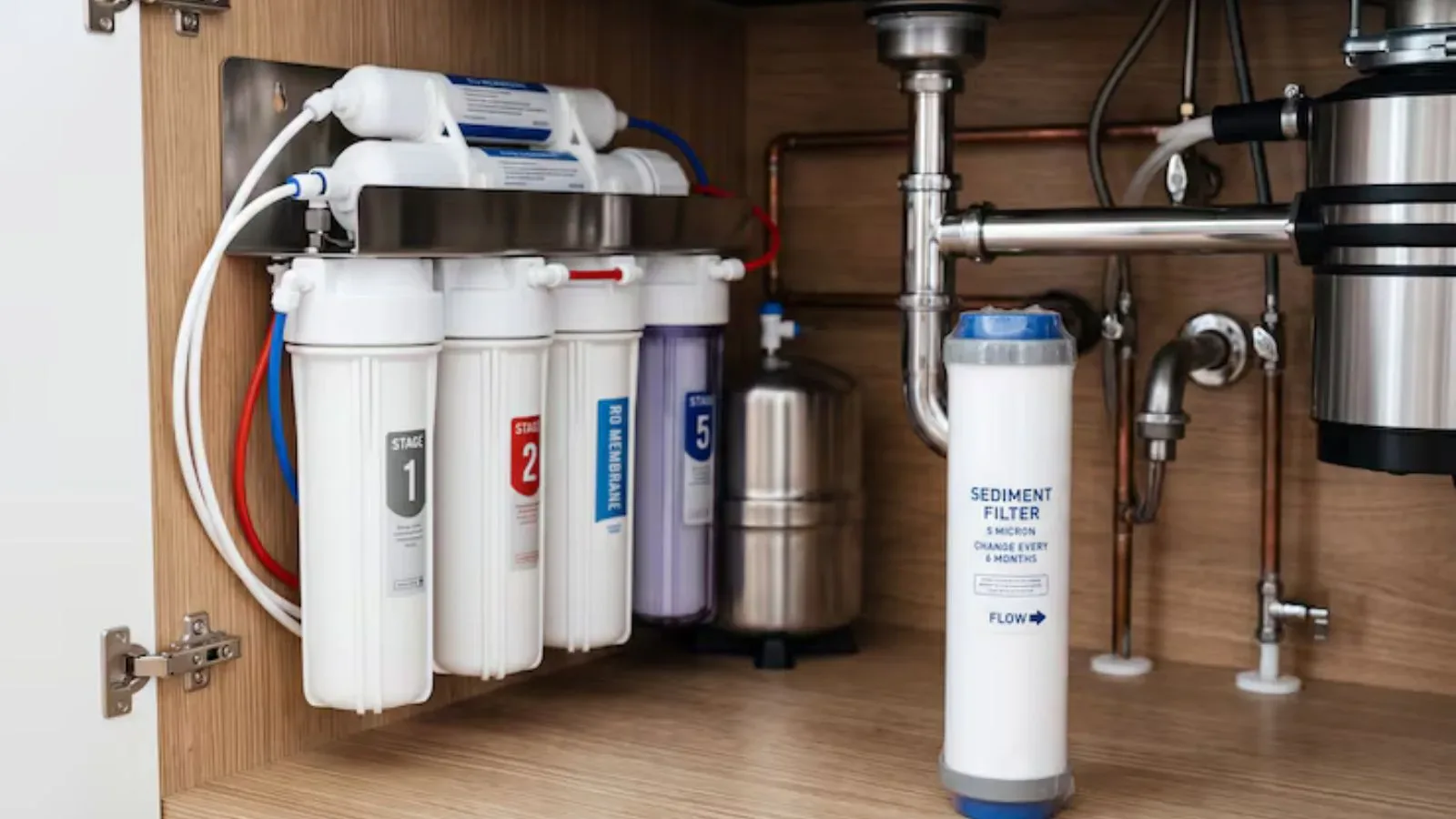
What Makes a Filter Smart
Most smart systems add flow meters and an app that tracks usage, tells you when to change cartridges and may alert you to leaks. Some include sensors for total dissolved solids or pressure. They do not add new kinds of filtration. The filter media is still carbon, sediment, reverse osmosis or similar.
That means the first question is what you want removed. A smart label on a carbon filter does not make it remove contaminants that carbon cannot. Check what the filter is certified to reduce and by whom.
Filter Types and What They Do
| Type | Typically reduces | Notes |
|---|---|---|
| Sediment | Particles and grit | Protects fixtures and other filters |
| Activated carbon | Chlorine taste and odor, some organics | Cartridges need regular replacement |
| Reverse osmosis | Dissolved solids and many contaminants | Needs a drain and wastes some water |
| Certified lead-reduction filter | Lead from household plumbing | Look for the certification |
| Water softener | Hardness minerals | See softeners and filtration |
Questions About Water at Your Tap?
Call and describe what you notice. A plumber can tell you what to test first.
Test Before You Buy
A lab test or a quality home test kit tells you what is at your tap. Ask the city for its annual water quality report, which lists what the supplier tests for and the results. Spend money on equipment only after you know what problem you are solving.
Taste and odor complaints often come from chlorine or from household plumbing, and cloudy water can come from air in the lines. A plumber can check pressure, fixtures and the heater, which are sometimes the real source.
How an Installation Goes
- 1
Decide the goal
Taste, scale, lead reduction or sediment each point to a different filter.
- 2
Site check
The plumber checks space, power, drain and pressure.
- 3
Clear price
You get a clear price before work starts.
- 4
Install and test
The unit is installed with a bypass and tested for leaks and flow.
Questions Before Buying a Smart Filter
- What contaminants is it certified to reduce?
- How often are cartridges replaced, and what do they cost?
- Does the app work without a subscription?
- What happens to the filter if the Wi-Fi or app fails?
- Who handles service if a connection or valve fails?
Whole-House or Point-of-Use
A whole-house filter treats all the water entering the home, which protects fixtures and appliances and improves the taste everywhere. A point-of-use filter, such as one under the kitchen sink, treats only that tap and is cheaper to buy and service.
For drinking water concerns, a certified point-of-use filter often does the job. For sediment or chlorine complaints at every tap, a whole-house unit makes more sense. A plumber can help match the type to the problem you actually have.
Cartridges, Costs and Connectivity
Over several years, cartridges and any subscription fees can cost more than the unit. Ask for the replacement schedule and prices before you buy, and check whether the app keeps working if you cancel a subscription.
Connected devices also need a reliable network and a power supply. A filter that shuts water off when it loses connection would be a poor design, so ask what the unit does if the connection fails.
Installation Details That Matter
A filter should have shutoff valves on both sides, a bypass and room to change cartridges. The plumber should support the housing so its weight does not strain the pipes. Pressure gauges before and after the filter help you see when cartridges are clogged.
Check the system after installation and again after a few weeks. Small leaks at new fittings often appear after the first pressure cycles, and a follow-up check catches them early.
Maintenance You Can Expect
Plan to change sediment and carbon cartridges on the schedule the maker gives. Sanitize the housing when you change them, and keep spare cartridges on hand. A filter left in place too long can slow flow and even harbor bacteria.
Check the pressure drop across the filter now and then. A big drop means the cartridge is loaded, and an app can alert you, though a simple gauge does the same job.
Ask the installer where the shutoff is for the filter and what to do if it leaks. A bypass lets you keep water flowing while you replace a cartridge, and knowing where it is turns a leak into a quick fix.
Write the install date and the next cartridge change on the housing with a marker, or set a calendar reminder. Even a smart app can miss a notice, and a visible date is a good backup that anyone in the house can read.
What the City Water Report Says
According to the City of Rolling Meadows 2025 water quality report, the city buys Lake Michigan water treated in Chicago and delivered through the Northwest Suburban Municipal Joint Action Water Agency. Lake Michigan has been the city's sole regular source since 1986, with four deep wells held as backup and an interconnect with Palatine.
The city also reports no known lead service lines, with a 2023 lead 90th percentile of 0.9 parts per billion. The report does not list a hardness figure, so we do not quote one. Ask Public Works for the full report and test your own tap.
Where a Plumber Fits In
A plumber installs the filter properly, adds a bypass, connects the drain and checks that pressure stays acceptable. A badly installed filter can leak or restrict flow. Our plumbing installation team handles this work.
If you live in Palatine, the village gets its water from a different supplier. Read our Palatine page for where to ask about that water.
Sources and Local Rules Behind This Page
Plumbing work in Illinois is governed by the Illinois Plumbing Code, 77 Ill. Adm. Code 890, which municipal inspectors enforce, and the Illinois Department of Public Health licenses plumbers. The service line ownership and lead notes here come from the City of Rolling Meadows water pages and its 2025 water quality report, according to which the city has no known lead service lines.
We name these sources so you can check them yourself. Rules and phone numbers change, so confirm with the city office or the state before you rely on any detail for a permit or a purchase.
Common Questions
Not necessarily. The city reports its test results, and a filter is optional for taste or personal preference.
The filtration is the same. The smart features add monitoring and reminders.
From Lake Michigan, treated in Chicago and delivered through the Northwest Suburban Municipal Joint Action Water Agency.
Its water quality report does not list a hardness value, so test your tap.
The city states it has no known lead service lines.
Ask Public Works at 847-963-0500 on weekdays.
Still not sure what you are dealing with? Call (847) 281-8626 and describe it to our dispatcher.