
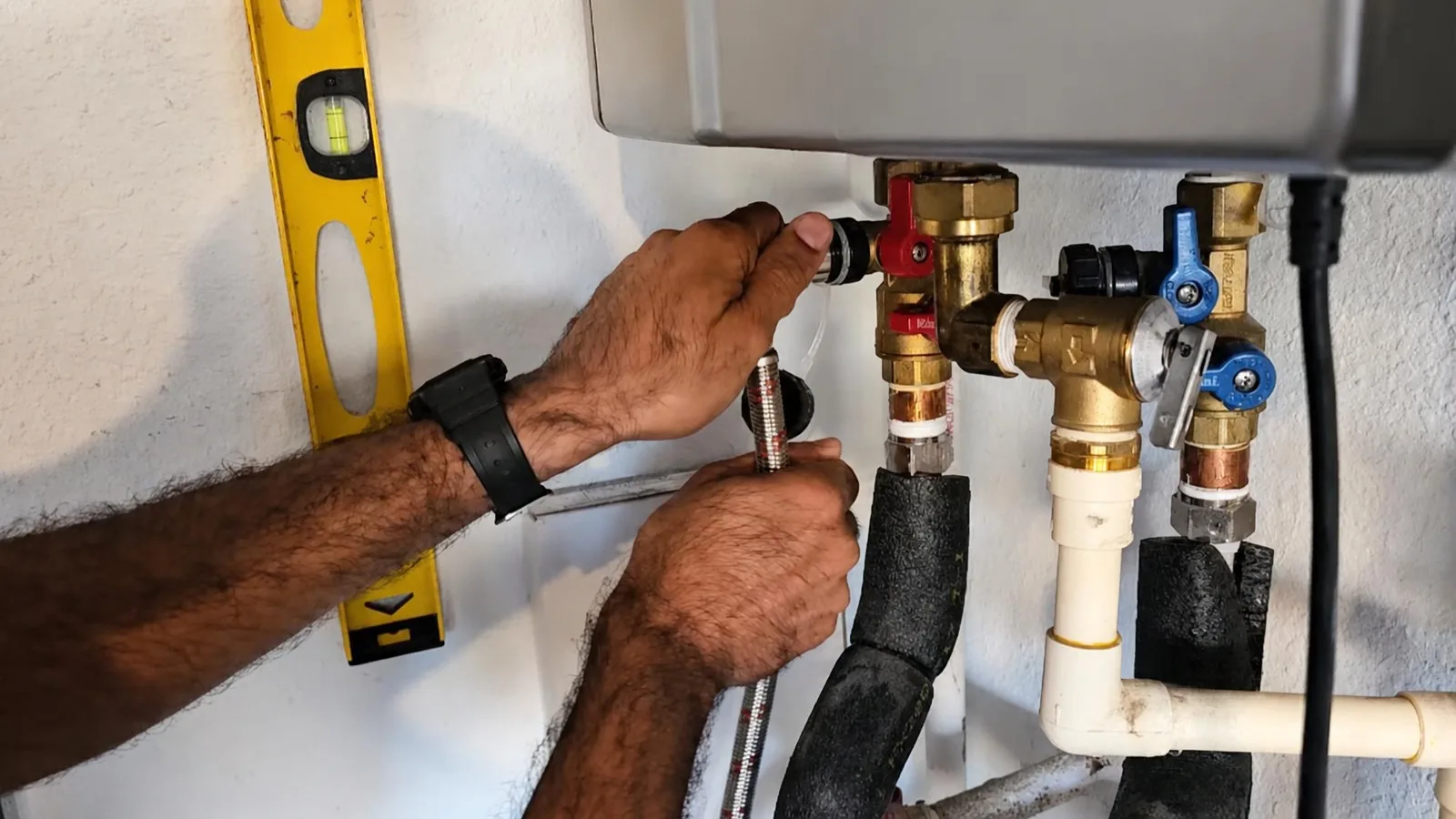
What the Relief Valve Is For
A pressure relief valve opens when pressure inside the unit or the plumbing rises above a safe level, venting water until pressure drops. It is a safety device and is not meant to be adjusted or plugged. A valve that has opened is doing its job, which is why a drip deserves attention and not a quick fix.
Some tankless models rely on other protections in addition to a relief valve, and manufacturers differ on whether a valve is supplied with the unit or installed in the plumbing. The installation manual for your unit is the final word on what the valve should be and where it should discharge.
Why a Tankless Relief Valve Drips
| Cause | What is happening | What to do |
|---|---|---|
| Thermal expansion | Heated water expands in a closed system | Ask a plumber about an expansion tank |
| High supply pressure | Street or house pressure above the valve rating | Measure pressure and consider a regulator |
| Worn or debris-fouled valve | The seat no longer seals | Replace the valve |
| Unit overheating | A control or sensor fault | Shut off the unit and call a plumber |
| Closed loop with a check valve | No place for expanded water to go | Add an expansion tank |
Do Not Plug the Valve
Capping or plugging a relief valve to stop a drip removes the protection it provides. If the valve is the only safeguard against a pressure spike, the unit or a pipe could fail dangerously. A drip is a symptom to diagnose, not a nuisance to silence.
If the valve is discharging steadily or hot water is spraying from it, shut off power or gas to the unit, close the cold supply to it and call a plumber. Keep clear of the discharge line, since the water can be scalding.
Relief Valve Spraying?
Shut off the unit and call the 24/7 line. A same-day appointment is offered when available, and the price is clear first.
What a Plumber Checks
- 1
Static pressure
A gauge on a hose bib shows the house water pressure at rest.
- 2
Expansion control
The plumber checks whether the system is closed and whether an expansion tank is installed and charged.
- 3
The valve itself
The valve is tested and replaced if it will not seal after operating.
- 4
Unit controls
Temperature settings, sensors and error codes are read.
Discharge Line and Installation Details
The relief valve discharge should be piped to a safe location following the manufacturer's instructions and local code. It should not be capped, reduced or run uphill. A proper installation leaves the termination visible, so that a discharge can be noticed.
If your tankless unit was installed by someone else and you are unsure about the discharge, a plumber can inspect it. The tankless water heater page explains what an installation includes, and the repair page covers common faults.
Quick Checks Before You Call
- Note whether the drip is steady or only after hot water use
- Check the error code on the unit display
- Photograph the valve and the data plate
- Do not remove or adjust the valve
- Turn off the unit if hot water is spraying
Thermal Expansion in a Closed System
When water is heated it expands. In an open system, the extra volume pushes back into the city main. Many homes now have a backflow preventer or a pressure reducing valve at the meter, which closes the system and traps the extra volume.
The result is a pressure spike each time the heater runs. The relief valve is the only place for the pressure to go, so it drips. An expansion tank on the cold supply gives the water somewhere to expand, and it usually ends the dripping without any other change.
Testing and Maintenance
Manufacturers often recommend testing a relief valve by lifting its lever briefly once a year. Water should flow and then stop when the lever is released. If it keeps dripping afterward, the seat is worn and the valve needs replacement.
Do this only with the discharge line in place and clear of people. A plumber can test the valve while checking the unit, along with the water filter screen and the scale that builds up inside a tankless heat exchanger.
When Dripping Means Replace The Unit
If the valve and the expansion control are fine and the unit still overheats or leaks inside, the heat exchanger may be failing. That repair can cost nearly as much as a new unit, depending on age and warranty.
Ask the plumber for a written explanation of the fault and the options. Keep the model and serial number handy, since the manufacturer can confirm warranty coverage and what parts are available.
What To Photograph For The Plumber
Take a photo of the valve, the discharge pipe, the data plate and any error code on the display. Note how often the valve drips and whether it follows hot water use. These details speed up the diagnosis and help the plumber bring the right parts.
If the unit is under warranty, save the invoice and the installation record. A warranty claim often depends on proof that the unit was installed and serviced correctly.
What the City of Rolling Meadows Says
The City of Rolling Meadows states in its FAQ that a permit is required for a new or replacement water heater, and that contractor licenses and bonds must be on file with Community Development. A tankless installation or replacement therefore goes through the permit process, which includes the relief valve and discharge.
The same FAQ sets vent clearances that matter for tankless units, noting that single-wall vent pipe needs 6 inches of clearance and B-vent 1 inch. Ask the plumber which vent type your unit uses and confirm with the city, since the city is the source for local rules.
Nearby Areas We Serve
We dispatch from Rolling Meadows and also serve Palatine, where the village has its own water heater permit and inspection rules. If you are in Palatine, read about Palatine emergency plumbing for how those differ.
Whichever side of the line you live on, a relief valve that discharges is worth a call. Describe what you see, and dispatch will tell you whether to shut the unit down while you wait.
Sources and Local Rules Behind This Page
Plumbing work in Illinois is governed by the Illinois Plumbing Code, 77 Ill. Adm. Code 890, which municipal inspectors enforce, and the Illinois Department of Public Health licenses plumbers. The permit and vent clearance notes here come from the City of Rolling Meadows plumbing FAQ, according to which a new or replacement water heater needs a permit.
We name these sources so you can check them yourself. Rules and phone numbers change, so confirm with the city office or the state before you rely on any detail for a permit or a purchase.
Common Questions
A small drip can come from thermal expansion, but it still deserves a check. Steady dripping or spraying is not normal.
It involves gas or electrical shutoff, draining and correct discharge piping, so a plumber is the safer choice.
Not always. Check your installation manual, since requirements differ by model and installation.
The city's FAQ states a permit is required for a new or replacement water heater.
The city's FAQ lists 6 inches for single-wall vent pipe and 1 inch for B-vent. Confirm details with Community Development.
Rolling Meadows Public Works at 847-963-0500 on weekdays.
Still not sure what you are dealing with? Call (847) 281-8626 and describe it to our dispatcher.