
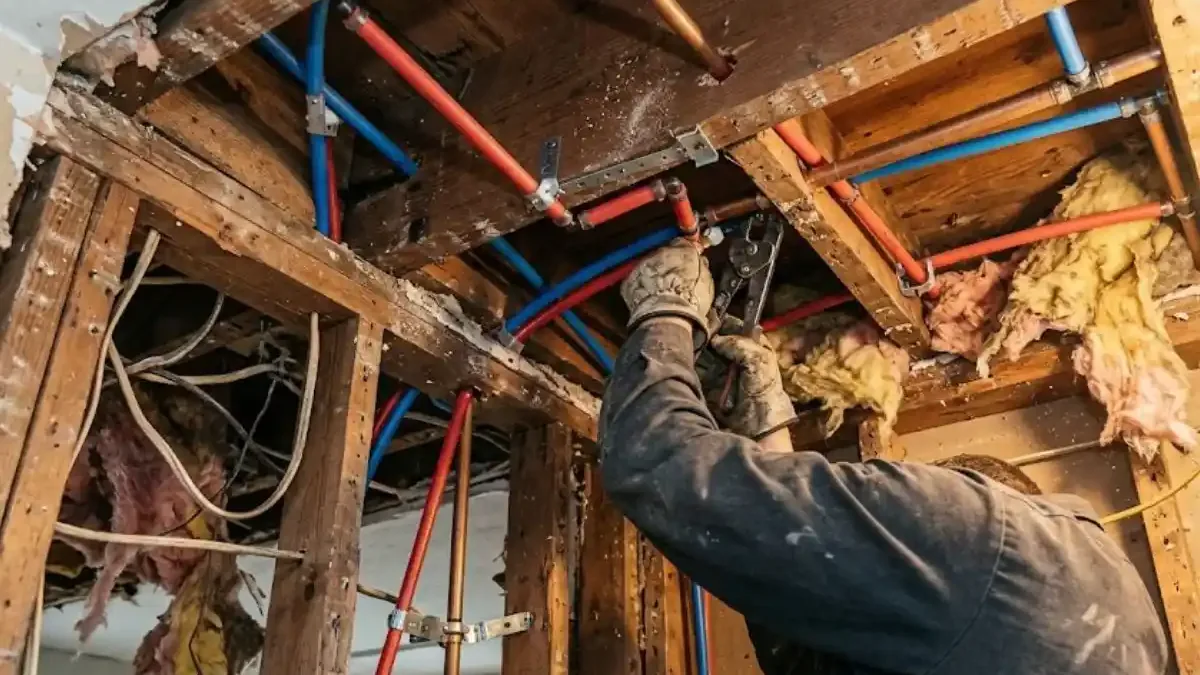
Signs Your Pipes Are Near the End
Low pressure at several fixtures
Galvanized steel narrows from the inside as mineral and rust build up.
Brown or orange water
Rust is flaking off the inside of old iron or steel pipe.
Repeat leaks in different places
One failure after another points to a pipe-wide problem and not a single defect.
Pinhole leaks or green stains on copper
Corrosion is thinning the wall.
Visible rust or flaking at joints
Threaded joints in old galvanized lines fail first.
Water that takes a long time to run hot
Restricted or leaking lines can slow the flow.
Why Repiping Comes Up in Rolling Meadows
Most of Rolling Meadows housing was built between 1950 and 1980, according to the city's comprehensive plan. Homes from that era used galvanized steel or copper for the supply side, and both have a working life. Galvanized steel corrodes from the inside, so a pipe that looks fine outside can be badly narrowed within.
We do not assume what is in any particular house. The plumber checks the pipe where it enters, looks at a few visible runs and tests pressure, then tells you whether you have a repair, a partial repipe or a whole-house project. That check is the starting point for any price.
Pipe Materials Used for Repiping
| Material | Strengths | Things to know |
|---|---|---|
| Copper | Long track record and handles heat well | Higher material cost and soldered joints |
| PEX | Flexible, fewer fittings, easier to run through walls | Not for outdoor exposure to sunlight, and needs correct fittings |
| CPVC | Cost-effective for some jobs | Can become brittle with age, and has temperature limits |
| Type M or heavier copper or plastic such as SDR26 | Meets the city's plumbing FAQ minimums for supply piping | Confirm material and rating with the plumber |
Pipes Failing? Talk to a Plumber Now
Call the 24/7 line. Same-day appointments are offered when available, and you hear the price first.
How a Repipe Works
- 1
Inspect and plan
The plumber maps the existing lines and chooses a route that limits wall openings.
- 2
Price and approve
You get a clear price before work starts, including any permit and drywall repair.
- 3
Replace the lines
New pipe is run to fixtures and connected to the main and the water heater.
- 4
Test and restore
The system is pressure tested, then openings are patched or left ready for a finisher.
Partial or Whole-House
If one section is failing and the rest is sound, a partial repipe can solve the problem for less. If corrosion is widespread, fixing section by section means repeated wall openings and repeat water damage, and a whole-house repipe usually costs less over time.
The plumber can mark the sections that are in poor shape so you see why a partial repipe is or is not enough. If you are mid-emergency, the first step is a repair to stop the leak, and the repipe plan can follow later. The burst pipe repair page covers that first step.
Permits and What the City Says
The City of Rolling Meadows requires contractor licenses and bonds to be on file with Community Development before a permit is issued, and a permit is required for many plumbing projects. The city also says concealed plumbing needs an access door or panel, and that the supply pipe in copper or galvanized form must be type M or heavier.
Ask the plumber how permits and inspection fit into the schedule before you approve. Illinois sets the underlying plumbing code in 77 Ill. Adm. Code 890, enforced by municipal inspectors, so the finished work is inspected against it.
Before the Repipe Starts
- Clear access to the basement, water heater area and under-sink cabinets
- Plan for water to be off for part of the day and arrange for a place to wash
- Move furniture and photographs away from walls that will be opened
- Ask how drywall and paint will be handled and by whom
- Check with your insurer, since some policies cover repiping after a sudden leak
What Affects the Price
Repiping prices depend on the size of the home and how easy the pipe is to reach.
Want your real number? Call (847) 281-8626.
Sources and Local Rules Behind This Page
Plumbing work in Illinois is governed by the Illinois Plumbing Code, 77 Ill. Adm. Code 890, which municipal inspectors enforce, and the Illinois Department of Public Health licenses plumbers. The housing age notes here come from the City of Rolling Meadows 2018 comprehensive plan, according to which most housing was built between 1950 and 1980.
We name these sources so you can check them yourself. Rules and phone numbers change, so confirm with the city office or the state before you rely on any detail for a permit or a purchase.
Common Questions
Yes. The 24/7 line is open for burst pipes and major leaks, and a repipe can be planned afterward.
Low pressure, rusty water and repeat leaks are the main signs. A plumber checks the pipe material and condition before recommending one.
Many plumbing projects need a city permit, and the city requires contractor licensing and bonds on file. The plumber explains the steps before you approve the price.
It depends on the home and the material. The plumber gives a realistic window when you approve the price.
Yes, if the rest of the pipe is sound. The plumber can show which sections are worth replacing.
Still not sure what you are dealing with? Call (847) 281-8626 and describe it to our dispatcher.