
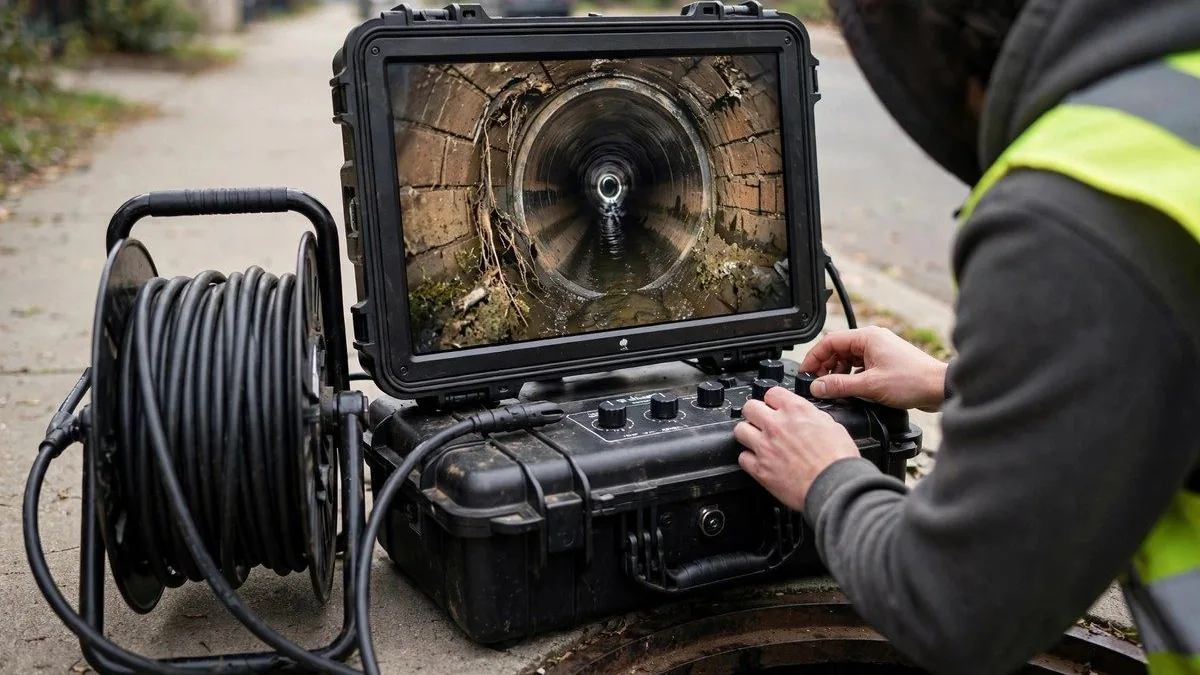
What a Sewer Camera Inspection Shows
The plumber feeds a flexible cable with a camera head into the line from the cleanout. As it travels toward the street, the camera streams video to a monitor, and a locator can mark where the camera sits underground. You see the pipe material, the joints and anything that does not belong in it.
Typical findings include roots entering at joints, cracks, an offset joint where two sections no longer line up, a belly where the pipe sags and holds water, and scale or grease coating the wall. Each one points to a different next step.
Reasons to Schedule an Inspection
Buying or selling a home
The lateral is the homeowner's responsibility from the building to the city main, so you want to know its condition before closing.
After a backup
A camera run tells you whether the backup was a one-time clog or a sign of damage.
Before a repair
Seeing the line lets the plumber choose between spot repair, lining and replacement with facts.
Repeat clogs
If the same drain clogs every few months, the camera finds the cause that cabling cannot.
How the Visit Works
- 1
Find the access
The plumber locates the cleanout or removes a toilet or trap to reach the line.
- 2
Clear if needed
A line with heavy buildup may need a cleaning first so the camera can see.
- 3
Run the camera
The camera travels the line while you watch and the plumber narrates what it finds.
- 4
Review the results
You get an explanation of the findings, plus a recording or notes you can keep for a repair decision or a landlord.
Want a Camera Look at Your Line?
Call to book. Same-day appointments are offered when available, and the price is clear before work starts.
What the Camera Finds and What It Means
| Finding | What it means | Likely next step |
|---|---|---|
| Root intrusion at a joint | Roots found a gap and are growing in | Cleaning, then repair of the joint |
| Belly in the pipe | A low spot that holds water and debris | Monitor or replace that section |
| Cracked or broken section | The pipe is leaking or may collapse | Spot repair, lining or replacement |
| Heavy grease or scale | The pipe wall is narrowed by buildup | Hydro jetting |
| Clear line, no defects | The pipe is in good shape | Routine maintenance only |
Inspections for Rolling Meadows Homes
Most Rolling Meadows housing was built between 1950 and 1980, according to the city's 2018 comprehensive plan, so the sewer laterals under those lawns have been in the ground a long time. A camera inspection does not tell you the pipe's age, but it shows its condition, which matters more.
The city's sewer guide makes the homeowner responsible for the lateral up to the city main, and it requires a permit before most work and a six-inch cleanout before the city will start right-of-way work. An inspection before a repair gives you what you need to talk through those steps.
A Note on Home Purchases
A standard home inspection does not usually include a sewer camera run. If you are buying an older home in Rolling Meadows, ask whether the seller has a recent recording, or schedule your own before the inspection period ends. The recording gives you leverage and a clearer budget.
We do not make promises about what the camera will find. We tell you what we see and what it could mean, and you decide how to proceed.
What Affects the Price
An inspection is priced by the visit, and the plumber confirms the price before work starts.
Insurance rarely covers an inspection, since it is not damage repair. Want your real number? Call (847) 281-8626.
Sources and Local Rules Behind This Page
Plumbing work in Illinois is governed by the Illinois Plumbing Code, 77 Ill. Adm. Code 890, which municipal inspectors enforce, and the Illinois Department of Public Health licenses plumbers. The ownership and cleanout guidance here comes from the City of Rolling Meadows sewer guide, according to which the owner maintains the lateral to the main.
We name these sources so you can check them yourself. Rules and phone numbers change, so confirm with the city office or the state before you rely on any detail for a permit or a purchase.
Common Questions
It varies with line length and access, and a clear line goes faster than a blocked one. Dispatch can give you a realistic window when you book.
Ask when you book. Many homeowners want the video for a repair decision or a landlord, and we can discuss what is included.
No. The camera head is small and flexible and travels inside the pipe without cutting or scraping it.
It can be, especially in an older home or before buying. It gives you a baseline and can catch an issue before it becomes a backup.
Yes, as part of an emergency visit. See emergency sewer line repair for how those calls work.
Still not sure what you are dealing with? Call (847) 281-8626 and describe it to our dispatcher.