
What Sewer Line Cleaning Means
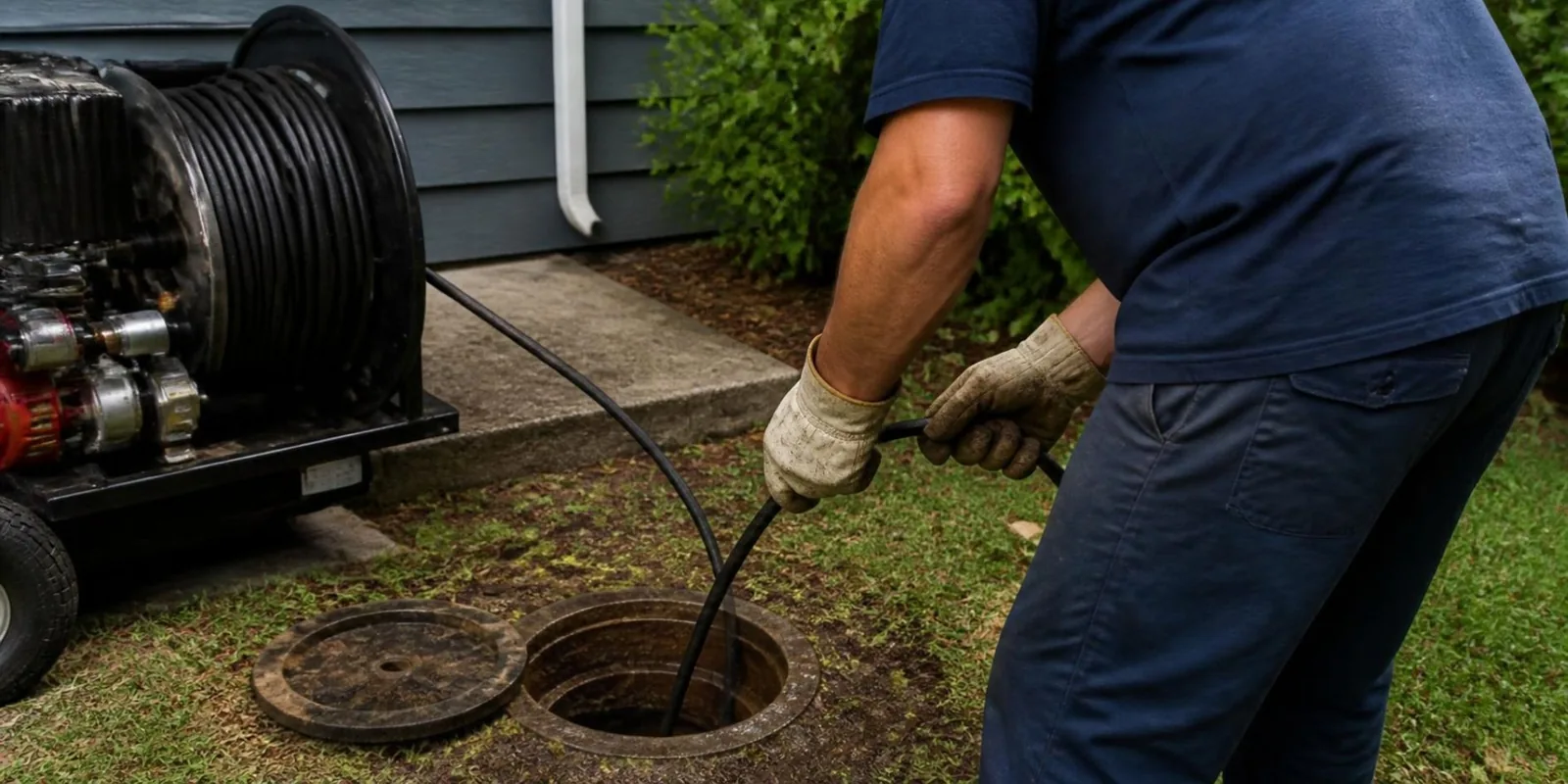
Sewer line cleaning clears the pipe that carries waste from your house to the city main. Unlike a single drain cleaning, it works on the large line that every fixture shares. A plumber reaches it through the cleanout, a six-inch access point with a cap that is usually near the foundation or in the basement.
The machine used depends on the clog. A heavy cable with a root cutter handles roots and solid blockages, and a hydro jetter cleans grease and scale off the wall. Most calls start with a cable to get the line moving, then move to jetting if the pipe is coated.
Active Sewer Backup: Your First Steps
If sewage is on the floor, stop using water, keep people and pets out and avoid touching the water, since sewage carries bacteria. Open windows if the smell is strong and call the 24/7 line.
Check the cleanout if you know where it is, because it often tells the plumber what to expect. Do not remove the cap if water is standing in the line, since pressure behind it can push sewage out.
Call the City First, Then Us
Rolling Meadows publishes a sanitary sewer guide that asks homeowners with a backup to call the city before hiring a contractor.
- Public Works, weekdays: 847-963-0500
- After hours the city lists its non-emergency police line, 847-255-2416, for dispatch to Public Works
- A city representative checks the main sewer line at no cost
- If the main is clear, the blockage is in your lateral, and you can call our emergency line
Causes of Main Line Clogs
| Cause | How it shows up | Typical fix |
|---|---|---|
| Tree roots | Slow drains that get worse over months, then a backup | Root cutter, then a camera look at the joint |
| Grease buildup | Odor and slow drains, worse after cooking | Hydro jetting |
| Flushed wipes and rags | Sudden backup, often after a party or a long weekend | Cable to pull the mass out |
| Pipe belly or break | Repeat clogs in the same spot | Camera, then repair |
Main Line Clogged?
Call the 24/7 line. Same-day appointments are offered when available, and you hear the price first.
Keeping the Line Open Afterward
The city's guidance describes routine maintenance as rodding from an outside six-inch cleanout with a six-inch root cutter by a plumbing contractor every two to three years, or as the line's history dictates. If your line has cleared roots before, that schedule can be worth following.
Some homeowners also pair a cleaning with a camera inspection so they can see the pipe before and after. Ask dispatch about both when you call, and decide what fits your home and budget.
Longer Laterals and Rolling Meadows Properties
The city notes that if a service line is longer than about 100 feet, the contractor's equipment has to be able to handle that length, and that if the rod cannot reach the main, the city should be called before it is removed. Those are good questions to ask any plumber, and we will tell you how far our machine reaches before the visit.
In neighborhoods near Salt Creek and in homes built between 1950 and 1980, a lateral may cross a lawn with mature trees. That is exactly where a cleaning and a follow-up camera run give you the clearest picture. Owners in the city's original neighborhoods can read more on the plumber in Kimball Hill page.
What Affects the Price
Pricing depends on the line and the clog, so we give a clear price after the plumber sees the cleanout.
If the city has already cleared a blockage in the right of way, the owner may be invoiced for that work, per the city. Keep any paperwork. Want your real number? Call (847) 281-8626.
Sources and Local Rules Behind This Page
Plumbing work in Illinois is governed by the Illinois Plumbing Code, 77 Ill. Adm. Code 890, which municipal inspectors enforce, and the Illinois Department of Public Health licenses plumbers. The ownership and cleanout guidance here comes from the City of Rolling Meadows sewer guide, according to which the owner maintains the lateral to the main.
We name these sources so you can check them yourself. Rules and phone numbers change, so confirm with the city office or the state before you rely on any detail for a permit or a purchase.
Common Questions
Yes. The emergency line is open 24 hours a day, every day. Tell dispatch which fixtures are backed up and whether you have called Public Works.
The city is responsible for the main, and its Public Works department checks the main at no cost. That is why the city asks residents to call first.
The city's guidance mentions every two to three years for rodding with a root cutter, or as past history dictates. A line that has never clogged may not need it.
It is a capped access pipe, usually six inches wide, that lets a plumber reach the sewer line. If you cannot find one, you may not have one or it may be buried.
A camera run can. See our sewer line repair page for what the plumber looks for and what the options are.
Still not sure what you are dealing with? Call (847) 281-8626 and describe it to our dispatcher.